
CMS December Spotlight - Hannah Pearson, CMS Managing Director

Hannah Pearson, CMS Managing Director (2022–2025)
Hannah Pearson has served CMS since 2022, first as Director of Operations, then as Managing Director, guiding governance at both the chapter and national levels, supporting conference planning and execution, and serving as a collaborative partner to the CMS Executive Director while working closely with the CMS Executive Office staff and elected leadership to advance organizational initiatives.
In January, Hannah will begin a new chapter working with the Atlanta Symphony Orchestra as Assistant General Manager, overseeing daily operations and supporting strategic oversight. In this Spotlight, she reflects on her experiences and contributions to CMS leading up to this transition.
You helped lead chapter governance and conference planning. What behind‑the‑scenes improvements or innovations should members know about that made the biggest difference?
I’ve greatly enjoyed playing a role in leading both chapter governance and conference planning during my time with CMS. At the chapter governance level, the work I’m most proud of centered around making governance more transparent, flexible, and efficient for the elected leaders and members who volunteer their time to serve. This work includes streamlining budget and financial communications so questions could be answered quickly and clearly, introducing automated forms to reduce the volume of individual email communication, and encouraging a culture of open communication (“yes, and”) and collaboration between Chapters and the Executive Office. I hope that these changes, while small, help ensure that CMS Chapters are supported by the CMS Executive Office in the planning of conferences and regional initiatives that engage with a wide cross-section of CMS members.
On the conference side, I’ve been fortunate to work closely with Charlie Chadwell, CMS Director of Professional Activities; Jeff Loeffert, CMS Executive Director; and the Program Committee leadership over the last several years to develop initiatives aimed at making CMS conferences more accessible, inclusive, and engaging. Ongoing efforts include engaging keynote speakers and performers whose work speaks directly to the themes of each conference, collaborating with industry partners to create unique experiences and networking opportunities for conference attendees, and constantly evaluating how we can make conference registration rates financially accessible while maintaining the fiscal sustainability of CMS conferences, both at the national and international levels.
A particularly memorable example of this type of innovative programming was collaborating with Tara Hoot and the District 5 wind quintet to stage a 7:00 am drag show performance during the 2024 National Conference in Washington, D.C., last fall. This event turned an early-morning presentation time into a celebration of creativity and inclusivity, and highlighted the organization’s commitment to amplifying diverse voices and experiences. This performance remains especially meaningful to me as a reminder of the ways in which thoughtful event planning can create moments of timely, genuine connection.
From an operations perspective, what is something you wish more members knew about what it takes to produce CMS events, webinars, and publications at a high standard?
How extremely collaborative (and intricate) all of these efforts are! With a small but dedicated staff team, we rely heavily on elected leadership (at both the Chapter and National levels) to imagine, propose, and vet new initiatives before they move forward. Every detail, from conference locations to webinar topics, is carefully reviewed and confirmed by elected leaders serving on behalf of CMS members.
On the staff side, the execution of member services is equally complex. Producing events and publications at a high standard requires constant coordination and volunteer support across all areas of CMS offerings, including communications, governance, marketing, and event planning. All services provided by CMS should ultimately align with the organization’s mission and aim to serve the needs and values of CMS members as a whole.
I also want to encourage the membership-wide recognition of the CMS staff team and their many contributions to supporting and executing the day-to-day activities and long-term goals of the organization. The CMS staff team is small, but outstanding: Shannon Devlin serves as the first point of contact for CMS members while also managing key membership initiatives and informational services; Dave Shafer safeguards CMS’s technology and data; Arisa Williams ensures fast web updates and communications; and Charlie Chadwell leads conference planning alongside his teaching and performing career. They are joined by interns Ani Berberian and Sheridan Mackey, who handle behind‑the‑scenes logistics, and Executive Director Jeff Loeffert, whose exceptional commitment to the CMS staff, elected leadership, membership, and organizational goals continues to move the organization forward.
What surprised you most about serving CMS, and how did that surprise change your approach to leadership or problem solving?
What surprised me most about serving CMS was how quickly my focus shifted from proving myself as an individual leader to recognizing the responsibility of serving the organization and the CMS membership as a whole. When I first stepped into my role, I was very concerned with my own effectiveness – leading a staff team, executing operations at a high level, and establishing credibility among my colleagues. I’ve since realized, however, that my success in this role depended much more heavily on actively listening to the needs of members, honoring and supporting the goals of CMS elected leadership, and working collaboratively across all organizational stakeholders to help move initiatives forward.
My work with CMS has ultimately been a meaningful (and humbling!) experience in true “service leadership” that helped me move away from my focus on personal achievement and toward supporting and amplifying the goals of others.
As you depart at the end of December, what hopes or advice would you offer to CMS leadership and members for the next phase of the organization’s growth?
One of my favorite strengths of CMS is the organization’s ability to create and foster genuine connections between members across all facets of the organization and disciplines across music in higher education. As I depart, I hope that CMS continues to expand this atmosphere of networking and support, while also finding new ways to meet the ever-evolving needs of the membership, particularly during this challenging time in academia. I encourage CMS to continue exploring ways in which we might best serve the full breadth of CMS members, especially students and contingent faculty, and to prioritize accessibility, inclusivity, and forward-looking initiatives.
I am also excited to see the ways in which CMS continues to expand on relationships with colleague organizations, like NAMM and NASM, to create new and meaningful opportunities for CMS members.
What is next for you, and how can CMS colleagues stay connected or support your next chapter?
I’m excited to join the operations team at the Atlanta Symphony Orchestra as Assistant General Manager in early January. I also plan to stay engaged with and support CMS as a member of the organization, and look forward to all that lies ahead for the society over the next few years (especially the 2027 International Conference in Iceland!). I’d love to stay in touch, and welcome anyone to reach out via social media (LinkedIn, Facebook, or Instagram (@hannahbp15)).
I am so genuinely grateful to have had the opportunity to serve CMS for the last three-and-a-half years, and I hope to stay in touch. The kindness, care, and community at CMS are unmatched, and this transition is truly bittersweet. Please say hello if you’re ever in Atlanta!
CMS November Spotlight - Beyond the Algorithm: Rethinking Music with AI (CMS Innovation Forums; led by Rey Sanchez)

Rey Sanchez, Associate Dean for Strategic Initiatives and Innovation and a Professor of Music Business and Entertainment Industries at the FROST School of Music at the University of Miami
CMS is excited to share the launch of our new “Innovation Forum” programming. Beyond the Algorithm: Rethinking Music with AI is a yearlong Innovation Forum hosted by Rey Sanchez (Frost School of Music) that brings together scholars, artists, and educators to explore the creative, ethical, and pedagogical implications of artificial intelligence in music. Through a series of virtual sessions and collaborative dialogue, the forum invites participants to critically examine how AI is reshaping musical practice, identity, and education, and to imagine new possibilities for the field.
Learn more about Rey’s approach to this series, as well as what to expect during these sessions, in the spotlight below.
What inspired the theme “Beyond the Algorithm,” and how does it reflect the current moment in music and technology?
I was looking for a title that expressed the idea of “moving on”, getting past the novelty of AI and onto using the technology as a normal part of our everyday activities. While AI tools are still rapidly evolving, I feel we’re now at a moment where we can rely on them regularly to positively affect our work.
In your view, what are the most pressing questions musicians and educators should be asking about AI right now?
They’re exactly what we’re exploring in these forums. I think we can put them in three general buckets:
- CREATIVITY - What is the role of AI in the creative process? This question includes issues of musical identity and “humanness”.
- EDUCATION - What is the role of AI in Music Education? This is a big topic because AI challenges some of our most fundamental presuppositions such as how music is made, and what defines a “musician”.
- ETHICAL/LEGAL – Who owns what and why? This is a complicated question, in part because of the patchwork of laws and copyright regimes around the world, and also because ethical standards vary among different societies and cultures.
How will the Innovation Forums create space for both excitement and skepticism around AI’s role in music?
I believe AI is the most important technological innovation impacting music since the advent of recording technology. I really hope we have many robust conversations during these forums. The general format will be a short introductory presentation on each topic and then open the floor to a hearty discussion.
Can you share a glimpse into the kinds of sessions or conversations attendees might experience?
I’ve pretty much laid it out here already. However, due to the nature of this field right now, I expect things to change very rapidly. (Just like the weather in the Midwest...) We’ll adjust accordingly along the way.
What do you hope participants will take away from this series, especially those navigating the intersection of creativity, ethics, and emerging technologies?
I hope the take away isn’t that we’ll somehow figure out all the answers, but rather that we’ll learn to ask better questions, particularly at the intersection of creativity and ethics.
Bio
An educator, scholar, producer, songwriter and guitarist, Rey is also the Associate Dean for Strategic Initiatives and Innovation and a Professor of Music Business and Entertainment Industries at the FROST School of Music at the University of Miami. This multi-faceted educator and musician is Director of the Bruce Hornsby Creative American Music (CAM) program, an innovative performing songwriting program with a curriculum developed with Frost School alumnus Bruce Hornsby that incorporates both American roots music and contemporary styles. The CAM program led to the development of what has become one of the school’s fastest growing areas of study, the BM in Modern Artist Development and Entrepreneurship (The MADE program). It also offers those with an interest in electronic music performance an opportunity to become full music majors, a first for a major music school in the U.S.
It’s that degree of commitment and initiative that Dean Sanchez has not only brought to the FROST School of Music, but also to the university as a whole. He was instrumental in establishing the first-of-a-kind joint JD/MM and MA degrees in Music Business & Entertainment Industries and Arts Presenting & Live Entertainment Management in cooperation with the University of Miami School of Law. He also spearheaded the development and launch of the online extension of the FROST School of Music - FROST Online - allowing students to take advantage of the aforementioned Master’s programs from the comfort of their computers.
Dean Rey not only brings that enthusiasm and exuberance to the classroom, but to every project he undertakes. An accomplished artist in his own right, Dean Sanchez has worked with numerous international artists, including Latin superstar Chayanne, for whom he’s served as his longtime musical director. His lengthy career has found him associated with such distinguished organizations as EMI Music Publishing, Sony Music, Universal Music and Columbia Pictures Publications among others. In addition, his band Yerba Blue released its debut album Americaña in 2010, a fusion of Bluegrass, Americana and Latin music.
The author of numerous educational guitar books published by FJH Music Publishing, Dean Sanchez is a voting member of the Recording Academy, a former President of the Music and Entertainment Industry Educator’s Association (MEIEA) and a current and founding member of the Board of Directors of the Association for Popular Music Education (APME). A specialist in international music copyright, he wrote an article, “Unfair? The Unique Status of Sound Recordings under U.S. Copyright Law and its Impact on the Progress of Sample-Based Music,” which was published in the 2012 edition of the Journal of the Music & Entertainment Industry Educators Association.
Dean Sanchez holds degrees in Music Theory/Composition and Studio Writing/Production.
CMS October Spotlight - CMS Director of Professional Activities (Charlie Chadwell)
What excites you most about leading the planning of CMS conferences?
My favorite part about planning the CMS conferences is getting to be at the center of all of the wonderful musicians and educators who come together to make these events possible. It's truly a privilege to get to work with the CMS staff, the Program Committee members, the presenters, and the guest speakers.
Can you share more about any new formats, themes, or experiences attendees can expect in Spokane this fall?
I’m especially excited about the new Table Talk sessions developed by the 2025 National Conference Program Committee. This presentation format brings together multiple presenters sharing research on related topics, followed by small-group discussions among attendees. It’s a fantastic opportunity for participants to make meaningful connections with others who share similar interests.
I’m also looking forward to the Post-Concert Reception and Pub Trivia on Friday evening. I hope everyone brings their Halloween costumes!
What’s one lesson you’ve learned from past conferences that’s shaping your approach to 2025?
The best parts about conferences like CMS are the opportunities for people to make new connections with others. The exchange of research and performance is great, of course, but perhaps just as important are the conversations that happen (planned or otherwise) among attendees. With this in mind, I've worked with the CMS staff and the Program Committee to create more communal events that encourage attendees to interact with each other. The dine-arounds, receptions, roundtable think-tanks, table talks, and the Defining Professional Futures Plenary Career Workshop are all events that I hope help to foster this kind of interaction.
What do you find most challenging about this role with CMS, and what is most rewarding?
Most challenging: Fitting together all of the presentations, performances, meetings, and receptions in a way that minimizes conflicts and creates a balanced, engaging experience, without making the schedule feel overwhelming.
Most rewarding: The conference itself! Getting to see people that I've been interacting with (primarily via email) for the last two years of the planning process is extremely gratifying. After reading the titles of the performances and presentations hundreds of times since the beginning of the proposal review process back in January, it's fun to finally see them come to fruition.
What advice would you give to someone attending their first CMS conference?
Attend as many sessions as you can—but also make time for the receptions, dine-arounds, and other informal gatherings. The casual settings are often where the most memorable conversations and lasting professional connections happen.
Bio
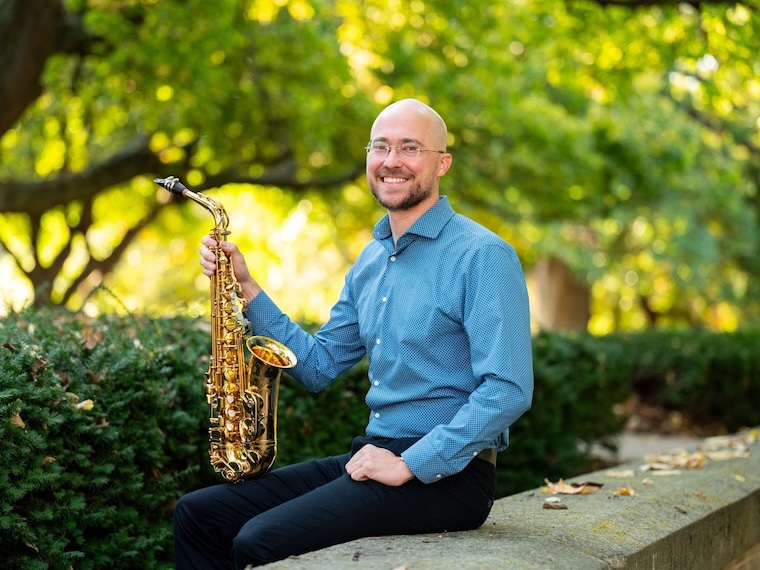
Charlie Chadwell is an active saxophonist, chamber musician, and educator. He serves as Assistant Professor of Saxophone at Western Illinois University and as Director of Professional Activities for the College Music Society.
An advocate for new music, Chadwell regularly commissions and premieres works for the saxophone. Recent performances include solo and chamber appearances at the International Double Reed Society, SEAMUS Conference, Electronic Music Midwest, and NASA. In 2023, he premiered Code of Conduct by James Stephenson with the WIU Wind Ensemble.
Chadwell is also a founding member of Camerata Nova, a contemporary woodwind quintet that reimagines the traditional ensemble by incorporating the saxophone. Dedicated to expanding the repertoire for this distinctive instrumentation, Camerata Nova has commissioned new works by Katherine Pukinskis, John Mindeman, and James Caldwell, and has received multiple grants, including the International Double Reed Society “50 in 50” Commissioning Grant.
He holds a DMA in Saxophone Performance and MM in Music Theory from Michigan State University, an MM in Saxophone Performance from Oklahoma State University, and a BM in Music Education with a Performance Certificate from The University of Texas at Austin.
CMS September Spotlight - CMS Administrative Interns
This month, we’re pleased to highlight Ani Berberian and Sheridan Mackey, our CMS Administrative Interns, whose thoughtful work has quietly supported many aspects of our day-to-day operations since they joined the team in June. From coordinating conference logistics to maintaining clear communication across departments, Ani and Sheridan bring focus, reliability, and a collaborative spirit to everything they do. We’re glad to introduce them more fully in this month’s Spotlight.
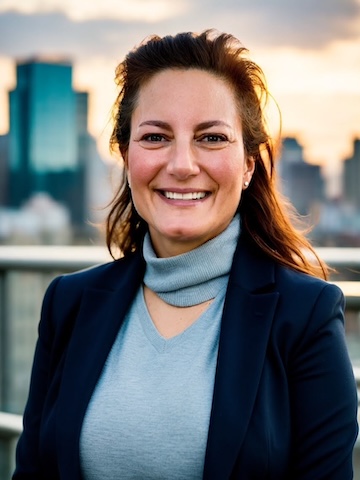
Left: Ani Berberian, CMS Administrative Intern (Publications & Member Services); right: Sheridan Mackey, CMS Administrative Intern (Social Media & Marketing).
1. What drew you to apply for the CMS internship?
Ani Berberian (AB): I have been a member of the College Music Society for over two decades and have long admired the organization’s commitment to supporting college music faculty, as well as undergraduate and graduate students, through opportunities for professional growth, personal development, and career advancement. Having witnessed its continued success, I am eager to contribute to and learn from CMS in a new capacity. After more than twenty years as a performing artist, my career is now shifting toward music leadership and administration. This internship offers an invaluable opportunity to gain deeper insight into the CMS’s leadership, structure, and operations—knowledge that will help me grow as I take on new professional directions while continuing to serve the music community.
Sheridan Mackey (SM):
I chose to apply for the CMS internship because of my interest in learning more about, and engaging with, non-profit music organizations. I was also drawn to apply for this position because of the opportunity to expand my skills in an arts administration role.
2. As you begin your internship, what are you most excited to learn or contribute to during your time with The College Music Society?
AB: I am excited to expand my understanding of strategic planning and how technological applications can support organizational leadership and streamline daily operations. While I gained valuable experience in operations during my time in the Air Force, I look forward to deepening that knowledge in the context of a music organization that I care deeply about. I am also looking forward to engaging with attendees and presenters at the national conference. Contributing to a smooth, positive conference experience for both presenters and attendees is something I feel strongly about, as it is an invaluable experience of learning and the exchanging of ideas. I am committed to assisting the CMS leadership staff in ensuring the organization runs smoothly, in order to continue to provide its members meaningful opportunities.
SM: I’m most excited to continue expanding CMS’s social media presence, while also learning more about marketing and event planning strategies.
3. Looking ahead, how do you see this internship supporting your future goals, whether academic, professional, or creative?
AB: After a rewarding performance career, I am excited to pursue the next chapter of my journey by leading a musical arts organization, whether within academia or the broader music industry. This internship provides an invaluable opportunity to observe firsthand how a successful organization like CMS is structured and managed. I admire the CMS executive staff’s model of servant leadership—a philosophy I also embrace, where true leadership means serving and equipping others with the tools they need to thrive. In addition, I aspire to host the International Clarinet Association’s Clarinet Conference in the future, and the chance to learn from CMS’s successful planning and execution of major events will be directly applicable to that goal.
SM: I believe that this internship will allow me to gain the experiences, skills, and connections that are vital to pursuing other arts administration positions in addition to maintaining an active performing and teaching career.
4. What aspects of music in higher education are you most passionate about exploring, and how do you hope to grow in those areas through this internship?
AB: As I prepare for a future leadership role, I would like to explore the pressing challenges facing music in higher education and to consider innovative solutions for addressing them. Furthermore, I am passionate about exploring how music in higher education can continue to evolve in ways that prepare students for sustainable careers in an ever-changing musical landscape. I look forward to engaging with CMS members to better understand the diverse perspectives and experiences of faculty, and to learn how these issues impact their daily work.
Through this internship, I hope to gain insight into how the College Music Society supports these areas by fostering collaboration, innovation, and professional development opportunities for faculty and students alike. I am especially interested in learning how organizational leadership and conference programming can highlight emerging trends and address the needs of today’s music students. I hope to grow not only as an administrator and leader, but also as an advocate for forward-thinking approaches to music education that empower the next generation of musicians, educators, and scholars.
SM: I am interested in exploring ways to interact with other music disciplines in higher education. Through this internship, I hope to gain a deeper understanding of how to facilitate meaningful interdisciplinary connections, while also learning how to expand these relationships through technology and social media.
Ani Berberian A native of Brookings, South Dakota, Ani Berberian is a distinguished clarinetist, educator, and military musician whose career spans more than two decades of performance, service, and teaching. She served 21 years in the United States Air Force, performing with The U.S. Air Force Band in Washington, D.C., and The U.S. Air Force Academy Band in Colorado Springs. She is currently pursuing a Master of Arts in Music Leadership at the Eastman School of Music, University of Rochester.
Before her military service, Dr. Berberian held academic appointments as Professor of Clarinet and Music Theory at Missouri State University, Artist Faculty at the Missouri Fine Arts Academy, and faculty positions at the University of Colorado–Boulder, Bemidji State University, and Concordia College.
An accomplished soloist, Ani has been featured at multiple International Clarinet Association ClarinetFests, national clarinet symposia, and in performances throughout Europe and Japan. She is also featured on the Cirrus label recording Black Swirls. Passionate about championing new music, she has commissioned works by Joseph Spaniola, Dana Wilson, and Jim Stephenson, and has collaborated with leading composers including Frank Ticheli, Joan Tower, Libby Larsen, and Michael Murray.
Ani earned her Doctor of Musical Arts in Clarinet Performance from Michigan State University, a Master of Music from Arizona State University—where she served as a graduate teaching assistant—and a Bachelor of Arts in Music and German from South Dakota State University. She is a Buffet Crampon USA Performing Artist and Clinician.
Outside of her professional pursuits, Ani enjoys hiking, biking, cooking, camping, collecting lighthouses, playing pickleball, and spending time with her husband and their two dogs.
Sheridan Mackey Sheridan Mackey is currently a master’s student at the University of Illinois at Urbana- Champaign pursuing a degree in Saxophone Performance and Literature, where she serves as a graduate assistant for the Illinois Athletic Bands. She is involved with a number of ensembles at the University of Illinois, including the Illinois Wind Symphony, Saxophone Ensemble, and Graduate Saxophone Quartet. Additionally, Sheridan is an Administrative Intern with the College Music Society for the 2025-2026 academic year.
An active soloist and chamber musician, Sheridan has given performances at the North American Saxophone Alliance (NASA) Regional and National Conferences, the International Navy Band Saxophone Symposium, Wisconsin Music Educators Association Conference, and Illinois Music Educators Association Conference. Sheridan was a member of the award-winning Roadmap Saxophone Quartet, who received first prize in the Jonathan McCall College Division of the New Orleans Chamber Fest in 2022. As a soloist, in 2024 Sheridan was named Runner-Up in the Illinois Division of the Music Teachers National Association (MTNA) Young Artist Competition.
Sheridan is also an active music educator. While at UW-Milwaukee, she served as the Music Theory teaching assistant. In this role, she helped organize the Music Theory Tutoring Center, was a guest lecturer in Fundamentals of Music Theory I-III courses, and provided one-on-one tutoring sessions to fellow graduate students. Throughout her education, Sheridan has also maintained a private saxophone studio. Her students have gone on to make the All-State Bands in Oklahoma.
A native of Oklahoma, Sheridan holds a BM in Saxophone Performance from Oklahoma State University, as well as a Performance Certificate in Music Performance from the University of Wisconsin-Milwaukee. Sheridan is an active member of NASA and an alumni member of Tau Beta Sigma National Honorary Band Sorority. She has studied saxophone with Dr. Nicki Roman and Dr. Johnny Salinas.
CMS August Spotlight - The Eileen M. Hayes Fund for Equity and Opportunity - Award Recipients

The CMS Fund is proud to announce the first three award recipients from our newly-inaugurated Eileen M. Hayes Fund for Equity and Opportunity. First, in June 2025, the Hayes Fund provided program support for Theorizing African American Music's second annual conference. Additionally, two individual scholars will receive research support – Jiayue Cecilia Wu for her presentation "Sound of Nangqên: A Spiritual Audiovisual Landscape," and Shekinah Ball for her research regarding African American spirituals and solo repertoire for lower brass. On behalf of the entire Society, we congratulate TAAM and our two scholar recipients, and we send thanks especially to those CMS members who have ensured the Hayes Fund's success. For information about how to support the Hayes Fund for Equity and Opportunity, or how to apply for future grants, please see our website.
CMS Fund President Bill Pelto took a moment to answer a few questions about the scope and goals of the Equity Fund and wider initiatives within The CMS Fund, below:
Can you describe the scope and goals of the Eileen M. Hayes Equity Fund?
The Eileen M. Hayes Fund for Equity and Opportunity was established in 2024 to recognize and honor the leadership and professional commitments of ethnomusicologist and past CMS President Dr. Eileen M. Hayes, the first African American and second woman of color to hold that office. The Hayes Fund aims to recognize exceptional commitments to equity and inclusion in music in higher education, guided by a preference to support proposals from contingent faculty and from groups underrepresented in academia.
What specific initiatives or programming does the Fund support to advance equity, access, and inclusion within the music teaching profession and academic communities?
The first awards from the Hayes Fund were just announced, following a vetting process that began earlier in the spring. Awards recognized the accomplishments of one organization, Theorizing African American Music, and two individual scholars, Jiayue Cecilia Wu and Shekinah Ball. The CMS Fund anticipates making similar awards each year, with our next call for proposals scheduled for the 2026 spring semester.
How do you hope to see the Equity Fund evolve over the next 5-10 years?
Activities of the Hayes Fund will depend largely on funding support from CMS members and others. We hope to see the Fund grow tenfold, mirroring our goal of growth for The CMS Fund as a whole. Such growth could obviously provide opportunities for larger numbers of scholars with diverse interests and contributions. With a larger balance to work with, the CMS Fund could also begin to make ongoing contributions to scholars' work throughout the year.
What advice would you give to future Equity Fund applicants?
Even for a first year of awards, the process was highly competitive, with over twenty proposals under consideration. Given that, applicants will be well-advised to make sure their proposals are well-written, aligning well with goals stated in the Hayes Fund documents, and demonstrating likelihood of development beyond a single one-time project.
CMS June/July Spotlight - CMS Chapter Presidents
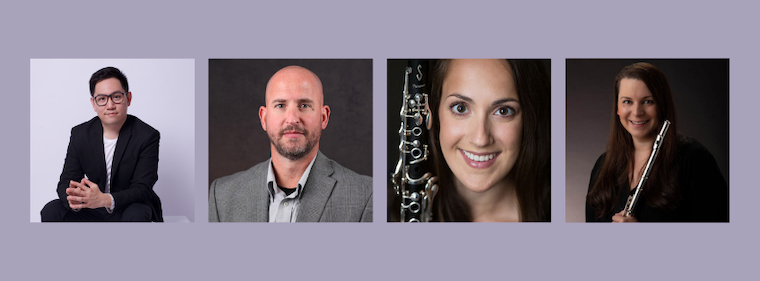
From left to right: CMS Chapter Presidents Yi-Yang Chen (CMS Central Chapter; University of Kansas), Ryan Keebaugh (CMS Mid-Atlantic Chapter; Bridgewater College), Aileen Razey (CMS Northeast Chapter; St. Olaf College), Sophia Tegart (CMS Northwest Chapter; Washington State University)
CMS Chapter Presidents play a vital role in furthering the mission of The College Music Society through their planning and execution of CMS Chapter Conferences, support of student scholars, direct engagement with faculty in their respective chapters, and leadership of their Chapter Boards.
Looking to get involved with your chapter’s leadership? Nominate yourself or a colleague using this link by September 1st.
What inspired you to take on this leadership role within CMS?
Yi-Yang Chen (YC): I was inspired to take on a leadership role within CMS because of the organization’s clear vision and its commitment to artistic freedom. CMS creates a space where we can build meaningful connections, explore new ideas, and expand beyond our comfort zones. It encourages creativity and innovation, which aligns perfectly with my own values as an artist and educator.
Ryan Keebaugh (RK): My inspiration came from a deep desire to contribute meaningfully to the music community and to help shape the future of music education and scholarship. CMS has always stood out to me as a space where diverse voices in music—educators, performers, composers, and scholars—come together. I saw this leadership role as an opportunity to amplify those voices, foster collaboration, and support initiatives that reflect the evolving landscape of music in higher education.
Aileen Razey (AR): CMS has provided numerous professional opportunities and resources since I first became a member during my doctoral studies. Upon receiving a recommendation from a CMS board member and colleague, I gladly stepped into my first leadership role as Performance Chair so that I could give back to an organization that I believed in. I was warmly welcomed into the Northeast Chapter and was inspired by the knowledge, skill, experience, and community that was shared at chapter conferences. Now as President of this chapter, I certainly hope to help provide experiences that continue to bring together students and professionals of all musical disciplines and give back to an organization that has already provided so much support in my professional development.
Sophia Tegart (ST): I wouldn’t say I was inspired to take on a leadership role as much as made friends with the people in my region and ended up volunteering to help out. I went to a regional conference in 2015 and enjoyed my time there. I met the chapter leadership and found myself hosting the 2016 regional conference. It felt good to be involved in the organization in my own region. Each position I have held has felt like a natural progression.
What do you most look forward to in your role as President this coming year?
YC: I’m especially excited about continuing to embrace a multidisciplinary lens to expand the boundaries of music and dialogue within our community. For the 2025 conference, I curated a program that bridges conversations between East and West, creating a vibrant environment for research sharing, idea generation, and interdisciplinary collaboration. I look forward to deepening this momentum in the year ahead.
RK: I’m most excited about creating opportunities for meaningful engagement, whether through innovative programming, interdisciplinary collaborations, or mentorship initiatives. I look forward to supporting our members in their professional growth and ensuring our chapter remains a vibrant, inclusive, and forward-thinking community. I’m also eager to explore how we can better integrate technology and global perspectives into our work.
AR: Our 2025 chapter conference left me with a strong sense of being part of a supportive and vibrant musical community, and I look forward to continuing to foster that sense of belonging at our 2026 conference. Over the past few years, our Northeast board has implemented initiatives to strengthen community and increase student involvement with the goal of providing an enriching professional experience for all of our membership. We will continue to support innovative and interdisciplinary submission calls, encourage student involvement and student-based sessions, and intentionally design our conference schedule to include time for connection and conversation.
ST: I look forward to attending the national CMS conference because it is finally in my own region! The northwest region doesn’t see a lot of national conferences for some reason, but it should! I love this region and am very excited for the CMS membership to see my hometown. Spokane is a hip town that hides in the eastern part of Washington and keeps to itself; while here you should check out Auntie’s Bookstore, The Onion Bar and Grille, the garbage-eating goat in Riverfront Park, and take the gondola ride over Spokane Falls!
How does your chapter hope to foster student engagement within CMS?
YC: We’ve taken a proactive approach by establishing a student chapter and launching initiatives that promote composer-performer collaborations at our conferences. These efforts have sparked meaningful interactions and brought fresh energy and creativity into our community. Fostering student engagement is essential to ensuring the future vitality of CMS.
RK: Student engagement is a top priority. We’re planning to:
- Host student-led panels and workshops that highlight emerging research and creative work.
- Launch mentorship pairings between students and professionals in various music fields.
- Create networking events that are both formal and informal to build community.
- Offer micro-grants or travel support for students to attend conferences or present their work.
We want students to feel that CMS is a place where their voices are heard and their contributions are valued.
AR: We are fortunate to have had dedicated Student Representatives who have played a key role in launching student-focused initiatives within our chapter. Our current representative has hosted online sessions prior to our chapter conference to help students connect, ask questions, and become familiar with CMS, and they have also planned student sessions during the conference. Additionally, we recognize student excellence through two annual awards at our conference: The Elliot S. Schwartz Student Composition Award and the Diane W. Follet Outstanding Student Scholarship Award. Student engagement is a standing item on our meeting agendas, and we remain committed to shaping our chapter as a supportive and welcoming space for our student members.
ST: The Northwest Chapter has developed monetary student awards for composition, performance, and papers at our regional conferences. We offer a lower student rate for our conferences and have even developed student-focused calls. We want the students of the Northwest Chapter to have opportunities to develop their presentation skills and present their research.
What advice would you give to CMS members who are interested in stepping into Chapter leadership? Are there particular qualities or experiences that helped you succeed in this role?
YC: To be honest, this role involves a great deal of behind-the-scenes work; but the support from CMS headquarters makes the process smooth and rewarding. If you have a passion for the arts and a vision for making a difference, this is your playground. Don’t be afraid to step in. The relationships you build and the experiences you gain will be incredibly fulfilling. Surrounding yourself with supportive colleagues and embracing a spirit of collaboration have been key to my success in this role.
RK: My advice is to start by getting involved—attend events, volunteer for committees, and connect with current leaders. Leadership in CMS is about service, vision, and collaboration. The qualities that have helped me most are strong communication skills, a collaborative mindset, a genuine passion for music and education, and the ability to listen and adapt. Having experience in organizing events, mentoring students, or participating in interdisciplinary projects can also be incredibly valuable.
AR: Holding leadership roles with the Northeast chapter has been incredibly meaningful, not only in terms of my professional development but also in building lasting relationships and friendships. There are many ways to get involved with our chapter, from holding a board member position to joining a committee that evaluates conference proposals, to taking on the role of student representative. I truly believe there is a leadership opportunity that can align with the interests of anyone committed to the values of CMS.
Our current chapter leadership is made up of respectful, caring, and dedicated individuals. If you are interested in stepping into a leadership position, I invite you to contact myself or other board members to share your interest. We would be happy to talk with you about the various opportunities and the responsibilities they entail. The qualities that have helped me feel in my roles are staying organized, being proactive, and maintaining clear and open communication. It is a privilege and deeply fulfilling to be part of a team that is committed to our musical community.
ST: Getting involved in CMS leadership is relatively easy! I recommend starting by submitting proposals for your regional conference or simply attending the regional conference. Getting to know the people in your region by listening to presentations often opens up potential collaborations and new friendships. Developing a rapport and relationship between yourself and the people in your region will help you understand the needs of the region and what leadership roles are needed. I recommend starting with conference leadership opportunities: serve on the selection committees, volunteer to help with the conference, act as Program Chair or Conference Host. Then run for an office! I recommend getting to know your region and its people, as well as the organization, and then give back to your profession through your service. In the end, always feel free to contact your region’s leadership and ask how to get involved.
Yi-Yang Chen
President, CMS Central Chapter
Dr. Yi-Yang Chen shot onto the international stage with back-to-back victories in the 2018 Sussex International Piano Competition, 2017 Washington International Competition, and the Warning International Piano Competition. The Worthing Herald music critic Richard Amey praised his recent performance “flair for the unusual and his technical and artistic capacity to deliver,” as well as his “musical and emotional intelligence, dexterity and virtuosity,” listening to Chen as soloist in Saint-Saëns’ Piano Concerto No.5 “Egyptian” with the Worthing Symphony Orchestra. His vibrant playing at the Pacific International Piano Competition (Canada) was recognized by the judges, who selected him for the first prize (“…Yi-Yang showed an impressive breadth of emotional investment and natural affinity for the music he played. The informed individuality and command of his performance was immediately compelling to the judges. We feel this young man has a fine future as an artist. He seems to ‘own’ the piano as he plays, and this makes his performance extremely powerful” – Dr. Robin McCabe).
Yi-Yang Chen is an assistant professor of piano at the University of Kansas and the Artist Director of the Orbifold Music Festival in California. Born in Taipei, Taiwan, Chen has been playing the piano since the age of 8. Yi-Yang completed his Doctor of Musical Arts And Bachelor’s of Music at the Eastman School of Music with Douglas Humpherys, and his Master’s degree at The Juilliard School with Robert McDonald and Jerome Lowenthal. He also has solo/chamber masterclasses with Itzhak Perlman, Emanuel Ax, Daniel Pollack, Joseph Kalichstein, Glenn Dicterow, Thomas Sauer, and with members from the Cleveland, Shanghai, Borromeo, Brentano, Ying, and Guarneri String Quartets.
Yi-Yang has captivated audiences worldwide with his flamboyant playing. He has performed on five continents in acclaimed venues, including Carnegie Hall, Lincoln Center in New York, Melbourne Recital Centre, National Concert Hall in Taipei, Banff Music Centre in Canada, ZK Matthews Great Hall in South Africa, and the Assembly Hall in Worthing, UK, with such orchestras as the Worthing Symphony Orchestra, Brevard Music Center Orchestra, Avanti Orchestra, Eastman Philharmonic Orchestra, National Chinese Orchestra, and the Thailand Philharmonic Orchestra. He has appeared at the Perlman Music Festival, Taos School of Music Summer Chamber Music Festival, Banff Music Centre, Music Academy of the West, Four Seasons Winter Workshop, and Brevard Music Center.
Yi-Yang Chen is a member of the Music Teachers National Association, College Music Society, and Mu Phi Epsilon. He enjoys swimming, biking, traveling, and composing. Yi-Yang is currently working on a recording project with Champs Hill label (UK); the release is scheduled for 2025. Before joining KU (University of Kansas), Yi-Yang served on the faculty at East Tennessee State University as a tenure-track professor.
Ryan Keebaugh
President, CMS Mid-Atlantic Chapter
Ryan Keebaugh, Director of Choral Music and Assistant Professor of Music at Bridgewater College, has been hailed by the Washington Post as an “energetic, expressive, concise, insightful, and sensitive” conductor. Ryan’s versatile and vibrant musicianship is well known for his expertise embracing singers of all ages, from young children and emerging choirs to university, community and professional choruses and has distinguished him as a leading music educator, guest conductor, and clinician to choral and ensembles throughout the United States. As an inspiring teacher, popular workshop clinician, conference presenter and adjudicator at choral festivals and educational workshops, he has presented workshops and master classes both nationally and internationally. Ryan’s collaboration work with American contemporary composers has distinguished him as an advocate for interdisciplinary collaboration in the arts, alternative venues, and new commissions. His choral ensembles have been invited to perform at international and national festivals, conventions, conferences, and historic locations including Radio City Music Hall, The Washington National Cathedral, St. John the Divine, New York University Steinhardt, The Kennedy Center, Carnegie Hall, Canterbury, and Edinburgh Cathedrals. Aside from his duties as a conductor and pedagogue, Ryan is an active member of the VMEA Creativity Council and was recently selected to serve The College Music Society's Mid-Atlantic Chapter as President Elect for 2022-2023.
Ryan has also maintained an active career within the marching arts. He has arranged and composed original music for several championship high school band programs in BOA, TOB, and USSBA circuits. He was a performing member of Carolina Crown and the Cadets and is an active consultant for several DCI World Class drum and bugle corps.
As a composer, Ryan’s “innovative and hauntingly beautiful" music has established him as a prominent composer and collaborator of his generation. Praised for its “gorgeous canvases of sacred minimalism" his music has been performed in venues throughout the United States, Canada, Puerto Rico, Europe, Japan, Brazil, and Russia.
Originally from Martinsburg, Pennsylvania, Ryan holds degrees from The Catholic University of America (DMA), Shenandoah Conservatory (MM), and Bridgewater College (BA).
Aileen Razey
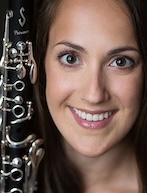
President, CMS Northeast Chapter
Aileen Razey, described by The Clarinet as having “a truly beautiful sound which she displayed with an emotionally colorful performance,” bridges various musical and artistic genres and atmospheres. Her artistry is deeply intertwined with her commitment to education, aiming to help audiences and students better connect with themselves and the world around them through music.
Currently Assistant Professor at St. Olaf College in Minnesota, Dr. Razey’s pedagogical approach is deeply informed by her performance experience. She finds immense joy in guiding students to achieve and exceed their goals. Her previous academic positions include Lecturer at Ithaca College and Assistant Professor at Kutztown University. Her former students are now music educators and professional performers. Bringing together her passion for performance and academic teaching, Razey served as Performance Chair for the College Music Society Northeast Chapter, hosted their 2024 conference, and currently serves as Chapter President.
The collaborative spirit of music drives Aileen’s performance career and allows her to connect with musicians and audiences around the world. She often performs with the Paragon Ragtime Orchestra and has previously performed with the Aspen Music Festival and School, Syracuse Orchestra (NY) Allentown Symphony (PA), Cayuga Chamber Orchestra (PA), Szavaria Symphony Orchestra (Hungary). Razey can be heard as principal and e-flat clarinetist on five GIA records with the North Texas Wind Symphony. She was first prize winner of the inaugural Henri Selmer Summer Clarinet Academy Solo Competition, semi-finalist in the Lisbon International Clarinet Competition, and finalist recognitions at both the International Clarinet Association Young Artist Competition and Orchestra Audition Competition.
A passionate advocate for contemporary music, Razey collaborates with emerging composers around the world. As clarinetist and movement artist with The International Collective, she is dedicated to being a member of an ensemble that merges responsibilities on stage, removing boundaries between music, dance, and staging. She previously performed with the Lucerne Festival Academy, Klangspuren Schwaz International Ensemble Modern Academy, and the Institute and Festival of Contemporary Performance at Mannes.
Razey holds dearly onto the legacy of clarinet playing passed on to her from her own clarinet teachers, all of whom have influenced her performance and pedagogy tremendously. She earned a Doctorate of Musical Arts in Clarinet Performance from the University of North Texas with a related field in music education, where she also served as Teaching Fellow in Clarinet. She earned a Master of Music in Clarinet Performance from University of Denver, where she served as Graduate Teaching Assistant in Clarinet and Musicology, and she earned a Bachelor of Music in Music Education from Ithaca College. Her studies include mentorship from notable teachers such as Kimberly Cole Luevano, Jeremy Reynolds, Michael Galvan, Pavel Vinnitsky, and Michael Rusinek.
Dr. Razey believes in maintaining physical and mental health to sustain her career as a musician and educator. She practices yoga, runs, dances, and hikes. Dedicated to promoting healthy lifestyle practices within the clarinet community, she is a member of the International Clarinet Association’s Health and Wellness Committee. Aileen resides in Minnesota with her husband, where they nurture a growing plant collection and enjoy traveling often.
Sophia Tegart
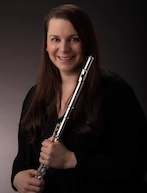
President, CMS Northwest Chapter
Dr. Sophia Tegart has led a varied and award-winning career as a flutist, musicologist, and clinician. A popular performer, she has been soloist with the Spokane Symphony, the Washington-Idaho Symphony, Chehalem Symphony Orchestra, and the Kansas City Civic Orchestra. As a Yamaha Performing Artist, Tegart has performed throughout the United States, Europe, and Asia. Tegart has also competed internationally, having been a finalist in the Mu Phi Epsilon International Competition and winning second place in the Music Teachers National Association Woodwind Young Artist Competition.
As an avid chamber musician, Tegart has performed at the National Flute Association Conventions, the Florida Flute Association Convention, College Music Society conferences, China ASEAN Music Week, International Conference on Women’s Work in Music in Bangor, Wales, and the Thailand International Composition Festival. Currently, Tegart is flutist in the Pan Pacific Ensemble, a wind quintet dedicated to the advancement of music by Asian and Asian-American composers. The Pan Pacific Ensemble has released two albums through Albany Records, one of which, “Feng,” was labeled one of 2019’s “Top Ten Albums of the Year” by the Daffodil Perspective. Tegart’s flute and piano duo with pianist Michael Seregow was a finalist for the 2019 American Prize in Chamber Music, and their album of works by women composers, “Palouse Songbook,” was released through Centaur Records in September 2020. Tegart also plays in the Washington State University faculty ensemble, the Solstice Wind Quintet. Together they have performed across the region with a memorable performance at the National College Music Society Conference in Vancouver, BC. Tegart also co-founded the Cherry Street Duo and has collaborated with the Portland Percussion Group. Her love of chamber music has led Tegart to arrange works for small chamber ensembles, which are currently published by Audible Intelligence Music.
Performing in the orchestral world, Tegart won positions with the Oregon Mozart Players and the Des Moines Metro Opera. Additionally, she was guest principal flutist in the Kansas City Chamber Orchestra, and performed regularly with the Kansas City Symphony, the Portland Festival Symphony, and was recently piccoloist with the Colorado Mahlerfest Orchestra. She currently performs with the Washington-Idaho Symphony and the Walla Walla Symphony on a regular basis.
A highly sought after pedagogue, Dr. Tegart regularly presents invited master classes, clinics, and lectures throughout the United States. She currently teaches at Young Musicians and Artists (YMA), and has served on the faculty of the Music For All Summer Symposium and Music in May. Additionally, she has taught at the Interharmony International Music Festival in Acqui Terme, Italy. Prior to her appointment at Washington State University, Tegart served on the faculties of Pacific University, George Fox University, Concordia University-Portland, and the University of Idaho. Since coming to WSU, she has taught numerous courses including applied flute, flute choir, chamber ensembles, History of Jazz, Women in Music, Music History: Antiquity to 1650, and a graduate seminar in Baroque music. In 2020, she was awarded the College of Arts and Sciences Early Career Achievement Award.
Tegart’s research interests include gender and music studies, nineteenth-century operatic mad scenes, and representations of art and literature in music. For her master’s thesis, “An Instrumental Voice: Use of the Flute in Lucia’s Mad Scene,” which focused on representations of madness, gender, and societal norms, she won the Mu Phi Epsilon Musicology Award. She has also presented lecture-recitals on Jessica Rudman’s Transformations, flute and bassoon duos based on the retelling of fairy tales by feminist poet Anne Sexton. Tegart has dedicated her performances and research to correcting the oversight of women composers and performers in the music world.
Dr. Tegart received her Doctor of Musical Arts degree in Flute Performance from the University of Missouri-Kansas City Conservatory of Music and Dance where she held the flute fellowship in the Graduate Woodwind Quintet and studied with Dr. Mary Posses. She graduated from the University of Oregon with a Master of Arts degree in Music History and a Master of Music degree in Flute Performance and from Washington State University with a Bachelor of Arts degree in History and a Bachelor of Music degree in Performance. Dr. Tegart is thrilled to be back on the Palouse, and especially to be in Cougar Country!
CMS June/July Spotlight - CMS Chapter Presidents
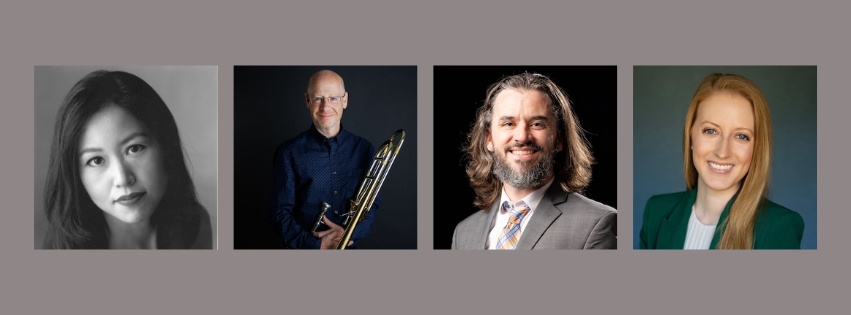
From left to right: CMS Chapter Presidents Junghwa Lee (CMS Great Lakes Chapter; Southern Illinois University Carbondale), Douglas Mark (CMS Southern Chapter; Mississippi University for Women), Kyle Gullings (CMS South Central Chapter; The University of Texas at Tyler), Jenny Gee (CMS Southwest Chapter; San Diego State University)
Meet four of our 9 CMS Chapter Presidents! This month, CMS recognizes the leadership and contributions of four of our nine dedicated Chapter Presidents. CMS Chapter Presidents play a vital role in furthering the mission of The College Music Society through their planning and execution of CMS Chapter Conferences, support of student scholars, direct engagement with faculty in their respective chapters, and leadership of their Chapter Boards. Stay tuned for the July newsletter to learn more about the presidents of the other CMS chapters.
Looking to get involved with your chapter’s leadership? Nominate yourself or a colleague using this link by September 1st.
What inspired you to take on this leadership role within CMS?
Kyle Gullings (KG): I owe so much to CMS. From my first professional conference experience at the 2009 Mid-Atlantic Regional at George Mason, to the 2019 International in Belgium, and beyond, CMS activities make up a large portion of the peer-reviewed entries on my tenure and promotion applications over the years. I've also appreciated the many professional relationships and fascinating ideas and works I've encountered through its conferences and publications. As an interdisciplinary musician with many interests (composing / music theory pedagogy / musical theater / administration), I recognize CMS's unique role in bringing together musicians of all stripes in common purpose. So I appreciate this opportunity to give back to this organization that has formed a cornerstone of my career and musical life.
Jenny Gee (JG): My decision to step into a leadership role within CMS was driven by a deep appreciation for The College Music Society's mission and its impact on our community of scholars, students, and professionals. I’ve seen firsthand how CMS fosters collaboration and professional growth, and I wanted to contribute more directly to shaping that experience for others. Serving as Chapter President of the Southwest Chapter will allow me to support and elevate the voices of our members while helping to strengthen the chapter’s outreach.
Junghwa Lee (JL): My first experience attending and presenting at the CMS National Conference in Vancouver several years ago was an eye-opener for me toward the high quality presentations and performances at the CMS National Conferences, and that motivated me to seek a way to contribute to the Society’s activities. When I reached out to the CMS Director of Professional Activities right after the conference at the time, he suggested that I reach out to the Regional President to start out from the Regional level, and that is how it started until I was led to this position by God’s grace and timing.
Douglas Mark (DM): My decision to take on a leadership role within the College Music Society was driven by a deep commitment to fostering community, innovation, and inclusivity within the field of music in higher education. I’ve always believed in the transformative power of collaboration—bringing together scholars, performers, and educators to exchange ideas, support one another, and advance the discipline collectively. The opportunity to serve as Chapter President is the culmination of years of service in various executive board positions, all of which have been rewarding.
The Southern Chapter has long been a hub for this kind of engagement, and I saw leadership as a meaningful opportunity to contribute to its mission more directly. I was especially inspired by the chance to help shape initiatives that address current challenges in our field—whether that means promoting diverse repertoires, supporting early-career professionals, or integrating technology and interdisciplinary work in meaningful ways.
Ultimately, I took on this role to give back to a community that has supported me throughout my career, and to help pave the way for future generations of music professionals.
What do you most look forward to in your role as President this coming year?
KG: At the end of every CMS conference or webinar, I am reminded of the thousands of people facing similar challenges and opportunities with resilience and ingenuity every day. I leave with a renewed sense of purpose and connectedness to our shared profession. This year, I look forward to working with our South Central Board, membership, and host institution to put on a conference where we can come together to move our field forward and celebrate those formative experiences that got us hooked on music in the first place.
JG: I’m especially excited about the opportunity to build stronger connections among our members and develop programming that reflects their evolving interests and needs. I look forward to creating spaces where our members can share ideas, gain inspiration, and grow both personally and professionally. Additionally, I’m eager to support our chapter’s executive board and cultivate leadership opportunities for members.
JL: At the Business Meeting at this year’s Great Lakes Chapter Conference, many discussions were held regarding the agenda items ‘how to increase interest in the organization and its activities, and to boost CMS membership’ and ‘how to support students and lower-income faculty’ among others, and as a result, our chapter has initiated student travel awards with a simple application starting from the 2026 Great Lakes Chapter Conference. In addition, the Great Lakes Chapter Board has proposed expanding student awards from 2 to 3 (composition; paper/lecture recital; stand-alone performance/showcase performance) starting from the 2026 Great Lakes Chapter Conference. We look forward to seeing more students encouraged to join CMS and participate in the Chapter Conferences and other CMS activities with these initiatives.
The Great Lakes Chapter Board’s proposal for the Chapter Bylaws amendment to expand the student awards has recently been voted in favor of by the Chapter Membership, and I look forward to seeing how this would encourage more student engagements, as well as the newly initiated student travel awards for attending the Great Lakes Chapter Conference this coming year and onwards.
DM: I am particularly excited about our upcoming conference scheduled for February 26-28, 2026, in Birmingham, AL. Our gatherings are always a high point on my academic calendar. In my role as President, I am proud to facilitate our chapter’s continued tradition of inclusion and collaboration as we plan for the 2026 conference. We have several goals this year, including a reassessment of our chapter’s by-laws, appointing a student representative for our chapter, and exploring ways in which our chapter can best serve our membership in an ever-changing professional landscape.
How does your chapter hope to foster student engagement within CMS?
KG: Our chapter has a strong tradition of student involvement, including participation in the student presentation awards at our annual conferences. We recently created a long-overdue Student Member position on our Board. Now we are really looking forward to welcoming a student perspective into our conversations and decision-making in a more intentional way.
JG: The Southwest Chapter aims to encourage student engagement through accessible events, opportunities to network with seasoned members, and invitations to participate in chapter initiatives. Our hope is to create an environment where students feel welcomed and supported, and where they can learn from the wider CMS community while contributing their own perspectives.
JL: As mentioned above, with the expanded student presentation/performance/composition awards and the student travel awards, our chapter will encourage more students to engage in the CMS conferences and activities.
DM: Our chapter is committed to student engagement. We strive to make our chapter gatherings as affordable as possible, with reduced student registration fees. Each year we offer two student awards at our regional conference: the Dennis Kam Student Composition Award and the David C. Kushner Student Paper Award. We have been fortunate to have robust student participation, but we are always looking for ways to enhance student engagement. In past years, we have had active student representatives, and we hope to welcome a new chapter student representative in the coming year. Additionally, we are exploring a series of mentorship offerings for students in our region, similar to the various mentoring programs provided at the national level.
What advice would you give to CMS members who are interested in stepping into Chapter leadership? Are there particular qualities or experiences that helped you succeed in this role?
KG: I've found my leadership work with CMS to be rewarding. If you have any interest, I strongly encourage you to reach out to current board members and ask about their experiences. You don't need a grand vision or years of leadership roles under your belt to benefit your chapter. To be successful, you only need a sincere desire to help out, some time to devote to the work, and a willingness to listen to others.
JG: As someone who is new to this role, I’m still learning and growing, but one thing I’ve already come to appreciate is the value of simply showing up and being engaged. For members interested in leadership, I recommend starting by attending events such as our Southwest Chapter Conference, volunteering for committees, and connecting with current board members. A collaborative spirit, curiosity, and a genuine interest in supporting others can go a long way in leadership. I’m grateful to be surrounded by a supportive and dedicated executive board, whose guidance and expertise have been invaluable as I navigate this role.
JL: As I was inspired by seeing the high-quality presentations, performances, and research at CMS National Conference several years ago, any CMS members with similar perspectives on their music career and research/performance/composition would fit in well within the Society where these qualities are shared, which, I am thankful to have noticed, is commonly seen at the Great Lakes Chapter as well. My past experiences as a treasurer of a local music teachers association as well as the Great Lakes Chapter helped me see the budget needs and events planning from a small to large picture, and having seen the process at another organization as its state vice president of membership has helped me to work with the Great Lakes Chapter Board and other offices at both the chapter level and CMS National Office, especially since it is teamwork that ultimately brings success to the organization and its purpose, goals, and activities.
DM:
If you're thinking about stepping into Chapter leadership, my biggest piece of advice is to not wait until you feel 100% ready — just get involved. Be sure to share your interest with your chapter’s board members. It has proven to be one of the most meaningful and rewarding service roles I have engaged in. Leadership in The College Music Society is about passion, initiative, and a genuine desire to serve your musical community. You don’t need to have all the answers; you just need to be willing to listen, collaborate, and grow.
The qualities that helped me most were being organized, open-minded, and committed to creating inclusive, meaningful opportunities for others. One of the greatest benefits of the leadership experience has been feeling the sense of shared community with colleagues from across our region and throughout the country.
Kyle Gullings
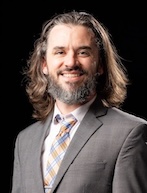
President, CMS South Central Chapter
Dr. Kyle Gullings is an administrator, scholar, composer, and educator. He joined the faculty of The University of Texas at Tyler in 2011, where he is an associate professor of music theory and composition. He served as Director of the School of Performing Arts from 2019 to 2023.
Gullings is committed to improving and increasing access to undergraduate instruction in music theory and composition nationally. He is a co-author of the free, online open educational resource (OER) music theory textbook Open Music Theory Version 2, supported by a $30,000 Course Redesign Grant (now VIVA Open Course Grants) from Virginia’s Academic Library Consortium (VIVA). His peer-reviewed articles appear in Engaging Students: Essays in Music Pedagogy and NACWPI Journal. His free and editable collection of over 100 original lower-division music theory course documents, "Open Educational Resources for Undergraduate Music Theory," is published on the peer-reviewed Resources page of the Journal of Music Theory Pedagogy.
As a versatile, collaborative composer of stage, vocal, and chamber works, Gullings' projects traverse diverse social topics including space travel, nuclear weaponry, mortality, mental illness, and the American Dream. He has been recognized through the National Opera Association's Chamber Opera Composition Competition (1 of 3 National Finalists) and the SCI/ASCAP Student Composition Competition (two-time Regional Winner), and has been performed across the country through the Kennedy Center’s Page to Stage Festival, John Duffy Composers Institute (now the John Duffy Institute for New Opera), Capital Fringe Festival, College Music Society, and Society of Composers, Inc.
Gullings completed his D.M.A. in Composition at The Catholic University of America, where he was also the first recipient of their unique Stage Music Emphasis master's degree. He holds a Bachelor of Music degree in Theory/Composition from Concordia College in Moorhead, MN. He enjoys running, home brewing, and spending time with his wife Terra and their dogs Ollie and Buddy.
Jenny Gee
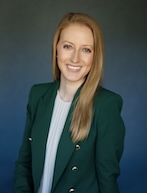
President, CMS Southwest Chapter
Dr. Jennifer Gee is an Associate Professor of Music Education at San Diego State University. She instructs undergraduate courses in elementary general music and music integration for elementary teachers. Gee holds a Doctor of Philosophy in Music Education from the University of Kansas, an Education Specialist degree in Elementary Administration from the University of Central Missouri, a Master of Arts in Arts Administration from the University of Missouri-Kansas City, a Bachelor of Music Education from the University of Kansas, and a Bachelor of Music in Clarinet Performance from Wichita State University. Her research is focused on preservice teacher preparation, specifically in positive classroom management strategies, and music integration in the elementary classroom.
Her research has been published in the Journal of Education, Journal of Music Teacher Education, Journal of Research in Music Education, International Journal of Music Education, Update:Applications of Research in Music Education, and Visions of Research in Music Education. Gee has presented research at the College Music Society National Conference, the Desert Skies Symposium for Research in Music Education, the Symposium for Music Teacher Education, the National Association for Music Education Music Research and Teacher Education National Conference, the International Society for Music Education, the American Orff-Schulwerk Association National Conference, the California All-State Music Education Conference, and the Kansas Music Educators Association.
Junghwa Lee
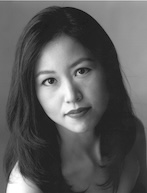
President, CMS Great Lakes Chapter
Winner of many competitions in Korea, including Sonyun-Hankuk-Ilbo, Wolgan-Eumak, Seoul National University Symphony Orchestra Concerto Competition and the Korean Symphony Orchestra Concerto Competition, Lee received the prestigious Performer's Certificate from the Eastman School of Music, along with the Max Landow Memorial Scholarship for outstanding doctoral students and the Liberace Foundation Scholarship for Performing/Creative Artists. As an active collaborator as well as soloist, she received the Excellence in Accompanying Award from the Eastman School.
With her interest in promoting music for young students and the community, she has also performed several times at the "Young People's Recital" as a guest solo artist, and has initiated and directed musical events, such as the Hays Spring Music Project and Scholarship Musicale in the Hays, Kansas area. As a dedicated teacher as well as performer, she has taught at many clinics, festivals and masterclasses, and organized the Fort Hays State University (FHSU) High School Piano Competition and the FHSU Summer Piano Camp. She directed the Cottonwood Music Project, a weeklong chamber music outreach program and concerts, during 2003-2005. Lee has directed SIU Summer Piano Camp and Competition since 2011, and is artistic director of Southern Illinois Piano Festival.
As an active researcher and performer, Lee has presented at various conferences including MTNA National Conferences, CMS National Conferences and Regional Conferences, ISMTA State Conferences, “Performing Clara Schumann” Conference at Cornell University among others, and recorded the Complete Piano Works by Frank Stemper, released by Albany Records titled BLUE13. The CD received a Gold Medal from Global Music Awards. In addition, it has been selected for Global Music Awards Top Ten Albums 2015.
A new album Clara Schumann: Piano Works commemorating Schumann’s 200th anniversary of birth year was recorded in 2019 and released by Centaur Records in March 2021 and has been awarded a Gold Star in the Best Piano Solo CD category on June 12, 2021 at “Music & Stars Awards,” an International Online Music Competition based in Barcelona, Spain.
Lee received her Bachelor of Music and Master of Music degrees in Piano Performance from Seoul National University. She earned her Doctor of Musical Arts degree in Piano Performance and Literature from the Eastman School of Music. Lee served as Visiting Assistant Professor of Piano at Oklahoma State University, Assistant Professor of Piano at Fort Hays State University and is currently Professor of Piano at Southern Illinois University Carbondale.
Douglas Mark
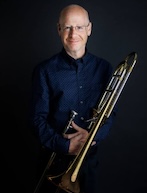
President, CMS Southern Chapter
Dr. Douglas Mark is Associate Professor of Brass at the Mississippi University for Women in Columbus, MS. He provides instruction in applied brass, music education, music appreciation, and directs the MUW brass ensembles. Prior to his arrival at the W, he was Professor of Trombone/Low Brass at Delta State University in Cleveland, MS. He has held similar positions at the Hochstein School of Music, Hamilton College, Nazareth College, and Colgate University, all located in western NY.
In addition to his teaching responsibilities, Dr. Mark has performed with several orchestras, including the Rochester Philharmonic Orchestra, Buffalo Philharmonic Orchestra, Syracuse Symphony Orchestra and the Binghamton Philharmonic Orchestra, among others. Locally, he has performed with the Memphis Symphony Orchestra, Mississippi Symphony Orchestra, Tupelo Symphony and the Delta Symphony. He has been an artist-in-residence at the Banff Centre for the Arts.
An advocate of community music projects, Dr. Mark has participated in the NEA Chamber Music Rural Residency in Liberal, KS. He has performed internationally in Canada, France, Germany, Japan, Mexico, Russia and Taiwan.
In the summer months, Dr. Mark serves as resident artist and Dean of Students at the Atlantic Music Festival, located in Waterville, ME.
Dr. Mark received his DMA from the Eastman School of Music, where he studied with John Marcellus. He earned his MM from the New England Conservatory of Music and undergraduate degrees in music performance and sociology from Northwestern University. His musical training also included studies with John Swallow, Frank Crisafulli, and Per Brevig.
Dr. Mark is an artist-clinician for the Buffet Group USA and Antoine Courtois-Paris trombones.
CMS May Spotlight - 2025 CMS Nominating Committee
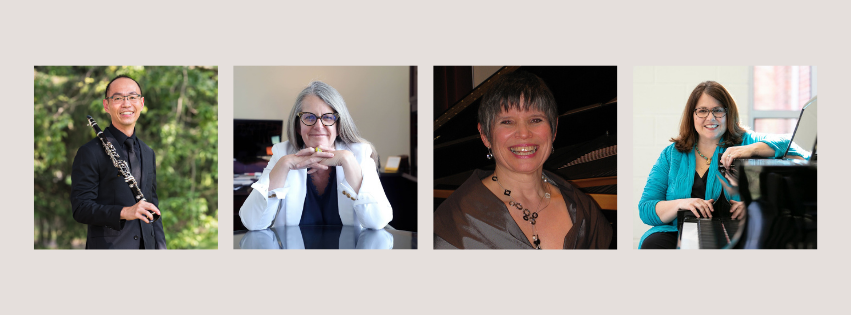
From left to right: CMS Nominating Committee Members Soo Goh (Chair), Appalachian State University; Michelle Kiec, Commonwealth University; Ruth Morrow, Midwestern State University; Jennifer Snodgrass, Lipscomb University
Meet the dedicated members of the 2025 CMS Nominating Committee! The Nominating Committee plays a vital role in shaping CMS leadership by coordinating and administering the nominations process, recruiting candidates for nomination, and working with the CMS Board to confirm the candidate slate. As we approach the upcoming May 13th deadline for the 2025 CMS Board elections, we invite members to engage in this important process and directly contribute to the future of CMS leadership by submitting a nomination(s) for themselves or a colleague(s) using this form.
Keep reading to learn more about the experience of the members on the committee and what it means to serve as an elected leader of The College Music Society.
What led you to serve on the CMS Nominating Committee, and what do you find most rewarding about your role?
SG: Serving on CMS committees enables me to recharge and expand my professional network beyond my home institution. The numerous connections established through CMS have provided me with opportunities for collaboration across the country and the world. These connections are incredibly rewarding. Serving on the CMS Nominating Committee gave me the opportunity to call upon this network to support the organization.
MK: While it has been an honor to serve CMS through elected leadership roles, it is a greater joy to foster leadership interest and engagement among colleagues in the community. I look forward to helping CMS elect outstanding board members!
RM: I am always willing to serve CMS in any capacity, so when Soo Goh asked, I said yes.
JS: This is my third appointment on the CMS Nominating Committee in my 26 years of service to the society. I truly enjoy the opportunity to find new leaders and voices for the Society. It is so fulfilling to be able to work with others in the field in identifying someone who will bring a passionate voice to the table.
How does the Nominating Committee support CMS's mission and impact the broader community in music higher education?
SG: The CMS Nominating Committee is truly a unique committee. Members of the Committee have the important responsibility of presenting a slate of outstanding nominees who will lead and shape the organization's future. It is a privilege to learn about the exciting work of our colleagues through the nomination process. Many of their interdisciplinary and collaborative work impacts the broader community beyond music and higher education.
MK: The world of higher education is rapidly changing, and CMS members have the right to serve as leaders in this changing environment. We hold the keys to the future of music in higher education and the responsibility to help propel forward tomorrow’s leaders in this space.
RM: I enjoy meeting (if only through bios and applications) like-minded members who wish to give of their time and talents to CMS. The CMS Nominating Committee serves CMS’s mission and impacts the broader community through our dedication to finding the best candidates for each open position so that they, too, can support the mission of CMS and be advocates for what matters in music in higher education.
JS: The Nominating Committee plays a crucial role in supporting CMS's mission by identifying and recruiting diverse, qualified candidates who can effectively guide the organization and represent the varied interests of the CMS membership.
Can you share some qualities or skills you believe are essential for leaders within CMS?
SG: CMS leaders are visionary, forward-thinking, and inclusive in their service to our membership. All opinions are welcome and thoughtfully considered as we move forward with the important mission of the organization.
MK: Listen and engage! Be open to new ideas while valuing the past. Respect historical practices while holding the courage to try something new. Most importantly, a positive attitude and finding joy in collaboration are essential!
RM: Vision and some sense of how to get there. Good communication and collaboration skills. Time, both for themselves to develop and grow as a person and a musician, and for their role in CMS leadership.
JS: A leader in CMS needs to have an understanding of the current challenges facing music in higher education while also being a champion of advocacy for music's role on our campuses and the broader contexts beyond the classroom or performance hall.
What advice would you offer to those interested in stepping into leadership roles within CMS?
SG: The organization values your voice and expertise as we navigate our fast-changing profession. Your service will have a profound impact that extends beyond music. We invite you to engage more meaningfully with CMS.
MK: Lean in and take the lead! All styles of leadership are valued and will be present in CMS's future. Ask questions of colleagues, engage with a mentor (ask anyone on this committee!), and trust your instincts. Leadership is displayed in many ways, and we look forward to collaborating with you!
RM: This is a service role. The furtherance of music is always the objective.
JS: I joined CMS as a master's student when I gave my first regional presentation back in 1999 and have been involved with the Society since that weekend. I am now an administrator, and so much of my journey as a leader came from those early years in CMS where I sought the wisdom of others and took on leadership roles. I would encourage those interested to engage in committee work at the regional and national level, to develop relationships with CMS members in your discipline areas, to attend both regional and national meetings, and to seek mentoring from current or past leaders.
Soo Goh (Chair)

Associate Professor Clarinet and Associate Dean for Academic Affairs, Hayes School of Music at Appalachian State University
Dr. Soo Goh is an associate professor of clarinet and associate dean for academic affairs at the Hayes School of Music at Appalachian State University. He is one of the first few musicians from Penang, Malaysia, to further his studies on the clarinet.
Previously, he was an Associate Professor of Music at Kutztown University of Pennsylvania. While at Kutztown, Dr. Goh was the Music Admissions and Outreach Coordinator. He firmly believes in mentorship and advocacy for students who may otherwise not have access to music education. He has performed with the Asheville Symphony Orchestra, Western Piedmont Symphony Orchestra, Symphony of the Mountains, Carolina Philharmonic, Greensboro Symphony Orchestra, and others. Dr. Goh has adjudicated for the International Clarinet Association and the MTNA. He has presented and performed at conferences such as the NCMEA, PMEA, ClarinetFest, Society of Composers, Inc., College of Music Society, Music by Women Festival, NACWPI, and others. Additionally, he has performed and taught masterclasses in Malaysia, Singapore, Austria, and Jordan. Dr. Goh has served the College Music Society in numerous roles. They include the regional conference committee chair, conference site host, nominating committee, and, most recently, the society’s national chapter secretary.
Dr. Goh holds a B.A. in Music and Computer Science from Luther College, a M.M. from Bowling Green State University, and a D.M.A from the University of North Carolina at Greensboro. His primary teachers were Michael Chesher, Kevin Schempf, and Kelly Burke.
Michelle Kiec

Provost and Senior Vice President for Academic Affairs, Commonwealth University of Pennsylvania
Dr. Michelle Kiec came to CU from Oklahoma City University (OCU), where she served as provost and vice president for academic affairs since 2022. Prior to OCU, Kiec served as interim vice provost for extended and lifelong learning and dean of graduate studies at Kutztown University. Over the course of her decade at Kutztown, she also held roles including dean of the College of Visual and Performing Arts as well as acting dean of the College of Education.
Kiec holds a Master of Music and a Doctor of Musical Arts in clarinet from the Peabody Conservatory of Music at Johns Hopkins University. Prior to that, she earned bachelor's degrees in music performance and German, both from the University at Buffalo.
A strong advocate for newly composed classical music, Kiec continues to perform chamber music as a clarinetist in various ensembles. A higher education innovator, she is dedicated to enhancing opportunities for students to learn and faculty to teach. Her many conference presentations include topics such as leadership planning and collaboration, student success programming, curriculum design, and faculty development. In her spare time, she enjoys hiking, trail running, and traveling abroad.
Ruth Morrow

Bolin Distinguished Chair of Piano, Midwestern State University
Dr. Ruth E. Morrow is the current Bolin Distinguished Chair of Piano at Midwestern State University in Wichita Falls, Texas, where she teaches all things piano plus world music. She holds degrees from Indiana University, Eastman School of Music, and Whitman College in piano performance, pedagogy, musicology, and philosophy, and teaches at the Indiana University Piano Academy each summer.
Dr. Morrow remains in demand as recitalist, collaborative pianist, and lecturer on topics from ragtime to movement to advocating for social justice and human rights issues through the piano. As avid a student as a teacher, Dr. Morrow consistently looks for avenues of personal and musical growth; to this end she is a Feldenkrais® Method Certified Instructor and pursues research in piano music for human rights, labyrinths, and silence. She enjoys digging deeply into music’s nuances, running, and her Bengal kitties, and has released a recording of solo piano music illuminating human rights issues.
Jennifer Snodgrass
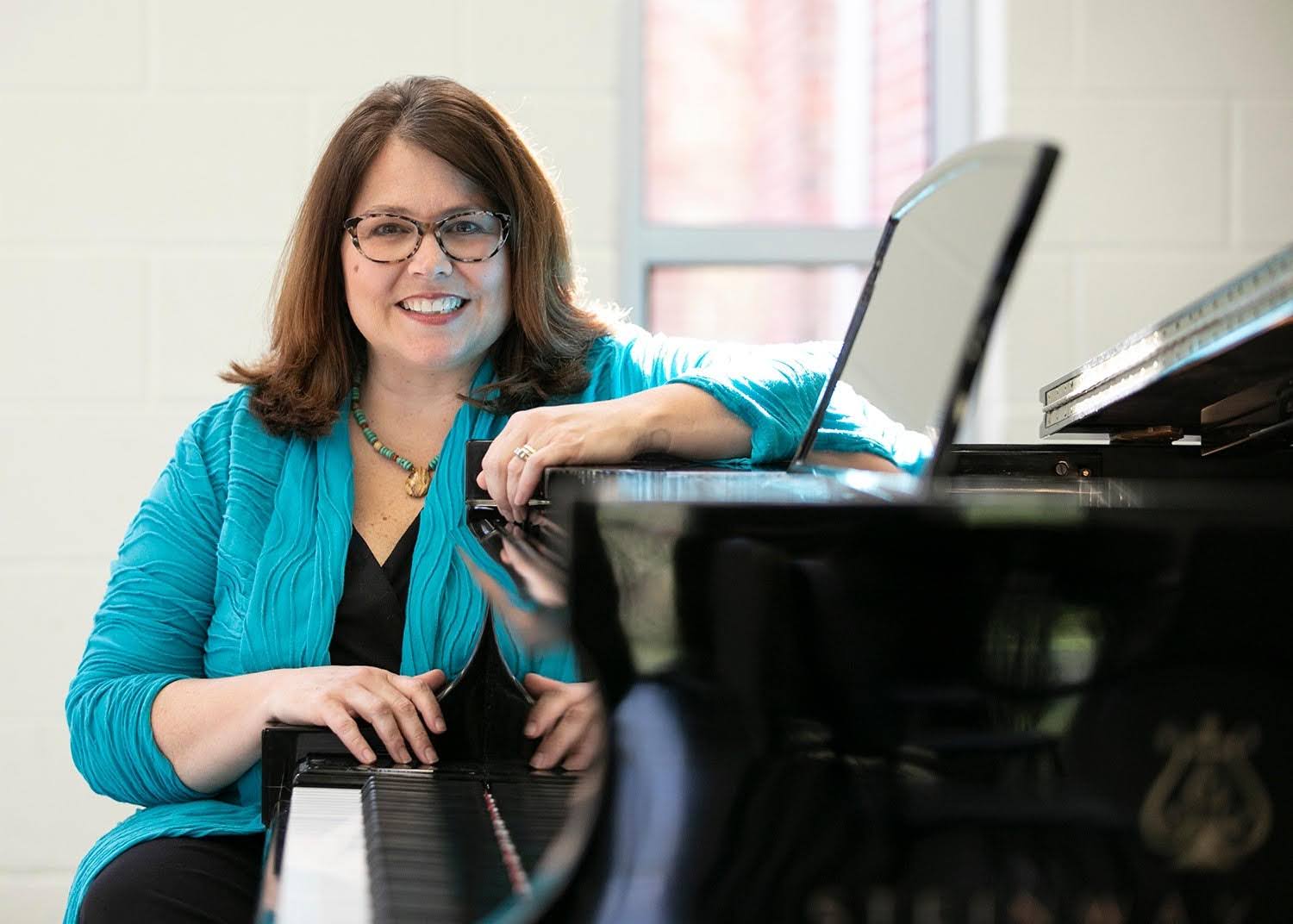
Director, University of Lipscomb School of Music
Jennifer Snodgrass is currently the Director in the School of Music at Lipscomb University where she teaches music theory to undergraduate music majors enrolled in the classical, commercial, and musical theater programs. As of August 1, 2025 Dr. Snodgrass will be relocating to Middle Tennessee State University where she will serve as the Director of the School of Music.
Snodgrass has received several awards in relation to excellence in undergraduate education, including the UNC Board of Governors Excellence in Teaching Award, the Bledsoe Faculty Excellence Award for Humanities and the Arts and the SGA Outstanding Professor Award. She was also named an official quarter finalist for the Grammy Foundation Music Educator Award.
Snodgrass has published research in numerous journals and has three published textbooks, including Teaching Music Theory: New Voices and Approaches (Oxford, 2020); Contemporary Musicianship (Oxford, 2016, 2021); and Fundamentals of Music Theory (Pearson, 2013, 2019). Snodgrass is the past editor for the Journal of Music Theory Pedagogy and the Co-Director of the Gail Boyd de Stwolinski Center for Music Theory Pedagogy.
CMS April Spotlight - Dr. Daniel Adams

This month, The College Music Society proudly features Dr. Daniel Adams in our April spotlight. A dedicated and long-standing CMS member, Dr. Adams has been instrumental in advancing the Society's mission through his unwavering support and generosity. His contributions to the CMS Fund have played a vital role in fostering innovation and excellence within our community. We are honored to celebrate Dr. Adams' ongoing commitment to music and education. Learn more about Dr. Adams’ work and experience with CMS below.
Daniel Adams served as a member of the Texas Southern University Music Faculty for thirty-six years. He retired at the rank of full professor in January of 2025. He resides in Houston, TX. Adams holds a Doctor of Musical Arts from the University of Illinois at Urbana-Champaign, a Master of Music from the University of Miami Frost School of Music and a Bachelor of Music from Louisiana State University. He has composed numerous published musical works and has authored articles and reviews on topics related to Twentieth and Twenty-first Century percussion music. He is also the author of two entries published in the Oxford Encyclopedia of African-American History: 1896 to the Present (2009) and a revision of the Miami, Florida entry for the Grove Dictionary of American Music. Adams has served as a panelist and lecturer nationally and internationally. He has received commissions from The McCormick Percussion Group, The McCormick Duo, the Robinson High School Percussion Ensemble (Tampa, FL), The Gulf Coast Community Band, The Leechburg (PA) High School Percussion Ensemble, the Louisiana State University Percussion Ensemble, the EOS flute and guitar duo, guitarist Kenneth Kam, VioLet, Lee Hinkle, Richard Nunemaker Studios, Selmer Paris, Buffet Crampon, D’Addario Woodwinds, the Mesquite Trio. and the Texas Chamber Symphony. Adams’ music has been performed throughout the United States, and in Spain, Germany, Belgium, Sweden, Finland, Costa Rica, Turkey, Argentina, Bulgaria, Canada, Australia, Great Britain, and South Korea. His music is recorded on Capstone Records, Ravello, Navona, Phasma, Ablaze, Potenza, Albany, and Summit Records.
- What led you to join The College Music Society, and what has kept you engaged as a longtime member?
The first CMS meeting I attended was the 1979 inaugural conference of the Southern Chapter as an observer at the invitation of my mentor, Dr. Dennis Kam, during my first semester of graduate studies at the University of Miami. It was held at the University of Central Florida. I attended the 40th Anniversary of the chapter’s founding in 2019. I was one of two attendees who had also participated at the 1979 conference. I affiliated with the South Central Chapter in 1988 when I accepted my position at Texas Southern University and moved to Houston. If I remember correctly, I first presented at the 1989 regional in San Antonio and have remained active with the chapter over the years. I have enjoyed presenting at other chapters and welcoming their members to present at our conferences. There are many reasons that I have remained engaged as a longtime member. I appreciate how the scope of the organization has evolved to include new topics at our conferences. I hope CMS continues to grow in diversity and inclusivity, despite the significant cultural, intellectual, and political challenges ahead. - Reflecting on your time as President of the South Central Chapter, what moments or achievements stand out as highlights of your experience?
Organizing an annual chapter conference can be both challenging and rewarding. I was very fortunate to work with a diligent group of chapter board members during my two years as President. Inviting a compelling Keynote Speaker for a conference is crucial to setting its overall tone. I was very fortunate that two outstanding individuals accepted the invitation during my term. For our 2012 meeting in Ada, Oklahoma, the late Dr. Robert Freeman shared his vision of music leadership and described how his membership in CMS helped him advance in his career during his early days in the profession. In 2013, Dr. Catherine Parsoneault, then Associate Vice Provost for Planning and Assessment at Texas Tech University and former member of the Texas Higher Education Coordinating Board, delivered a presentation entitled “Music Programs in Texas: Leveraging Transparency” at our conference in Brownsville, TX. Also, encouraging our student members to present at the regional conferences was a big priority for me. Now that I have retired, I am interested in cultivating liaisons with other retirees and possibly mentoring student members and faculty in the early stages of their careers.
- What aspects of the CMS community do you value the most, and how has it impacted your personal and professional growth?
I find it rewarding to present my research and compositions regionally, nationally, and internationally, and to exchange ideas with my colleagues at other institutions. I had the pleasure of presenting at four international conferences: South Korea (2011), Argentina (2013), Sweden/Finland (2015), and Australia (2017). The conferences included scheduled tours and enough downtime to explore places that I may not have otherwise visited. I also valued serving as the National Board Member for Composition (2014-17). In addition to representing the interests of composer members, I also had the opportunity to participate in the search for the Executive Director in 2016. I also like the variety of music disciplines that comprise the membership of CMS. - As a supporter of CMS, what advice would you give to new members about making the most of their involvement in the organization?
I would begin by acknowledging the unfortunate fact that fewer tenure-track positions are offered now compared to when I entered the profession. Furthermore, many institutions are cutting budgets and are less generous in awarding travel funds. Nevertheless, it is still important to begin submitting proposals and attending conferences as early as you can and as much as you can afford to. Do not become discouraged if your proposals are not always selected. It is a very competitive process. Finally, please remember that you can gain as much insight from informal conversations with colleagues representing other institutions as you can from attending formal sessions. You may discover that some of the challenges and obstacles that you face at your institution are not that unique to your institution. Make it a goal to broaden your perspectives and to bring back ideas that you can share with students and peers at your institution and, most importantly, enjoy the support and fellowship of your involvement with CMS.
CMS March Spotlight - CMS 2025 National Conference Program Committee
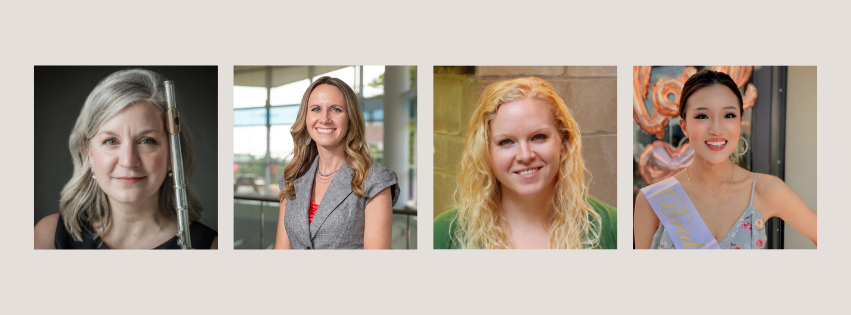
From left to right: Nicole Molumby, Alisha Nypaver, Katherine Pukinskis, Clara Yoon
In late February, the 2025 CMS National Conference Program Committee gathered in Spokane, WA, to determine the program for this fall's National Conference. Under the leadership of Chair Nicole Molumby, the committee diligently reviewed proposal submissions and delved into the central theme, “Creative Ecosystems: Music, Research, Practice, and Impact.” To further enhance the conference experience, the committee also explored the conference hotel and surrounding Spokane area, ensuring an optimal use of the location during event planning.
CMS is sincerely grateful to Nicole Molumby (Program Chair, Boise State University), Alisha Nypaver (Scholarship, Research, & Pedagogy Chair, Temple University), Katherine Pukinskis (Composition Chair, Carnegie Mellon University), and Clara Yoon (Performance Chair, Teachers College Columbia University) for their exceptional contributions. A special thanks to Jonathan Kuuskoski, who will spearhead the planning for the 2026 National Conference as next year’s program chair and who joined many hours of Zoom meetings to actively participate in this planning process.
We invited the 2025 National Conference Program Committee members to share their reflections on the planning experience and highlight what they’re most looking forward to during the conference this fall. We hope you enjoy learning more about their experiences!
**Interested in becoming involved on future Program Committees? Email Hannah Pearson at [email protected][email protected] for more information.
1. What motivated you to join the 2025 CMS National Conference Program Committee, and what has been the most rewarding part of the planning process so far?
Alisha: I’ve been involved with CMS for many years, and I was honored to be invited to join the program committee. It’s been a wonderful opportunity to give back to the society, but the most rewarding part has been getting to know and collaborate with the other committee members—they’ve been fantastic to work with!
Clara: For myself, joining the 2025 CMS National Conference Program Committee was an easy decision. I wanted to help create a conference that feels timely and impactful, especially in a field that’s always changing and facing new challenges. The most rewarding part so far has been working with like-minded people who are just as invested and committed—people who genuinely care about moving the field forward and making space for fresh ideas. It’s been energizing to see how everyone brings their unique perspectives and expertise to the table. Collaborating on something that has the potential to make a real difference, not just for the CMS community but for the broader world of music, has been incredibly motivating.
2. The theme of the conference is “Creative Ecosystems – Music, Research, Practice, and Impact.” In what ways has this theme shaped the vision for the 2025 CMS National Conference in Spokane?
Alisha: The theme has played a pivotal role in shaping the vision for the Spokane conference. Ecosystems are built on connections—connections between fields, disciplines, ideas, and people. We are composers, performers, audiences, creators, musicians, researchers, scholars, teachers, and students. We interact, influence, impact, and imagine.
CMS magnifies and breathes life into our ecosystem as we gather together. This conference is a celebration of connections.
Clara: “Creative Ecosystems” has been the driving force behind this year’s CMS National Conference, and it has pushed us to rethink the usual academic format and focus on how music operates within larger, interconnected systems—like education, technology, community building, and social change. We’re also exploring new ways of presenting, experiencing, and understanding music, making sure that the conference reflects how the field is evolving in real time. This year's theme has inspired us to create a program that goes beyond just presenting research; we’re including performances, workshops, and discussions that explore how music fits into these ecosystems, and we're aiming to make the conference feel very much alive and relevant. It's about showing that music isn’t just an isolated art form—it’s deeply tied to the world around it, shaping and being shaped by the communities it touches.
Kate: When I met (program chair) Nicole Molumby in 2023, she immediately gave off the vibe of being a person I knew I wanted to collaborate with in the future. She is a curious, empathetic, and interdisciplinary thinker, always looking to strengthen our field by reaching both outward and deeper. Her invitation to be involved on the program committee was an easy “yes,” because it meant being part of a team that was committed to the future impact and sustainability of music and music-making in professional practice.
3. What can attendees look forward to in Spokane this fall?
Alisha: Our fearless program committee chair, Nicole, has an exciting vision for the conference, and I can't wait to see it all come together! As chair of the Research, Scholarship, and Pedagogy Committee, I’m especially excited about the incredible papers, workshops, demonstrations, and panels that will be presented. We received so many outstanding submissions that narrowing them down was no easy task!
Clara: I don’t want to spoil it too much, but it’s shaping up to be a really dynamic and engaging experience. Spokane’s vibrant arts scene and beautiful natural surroundings will definitely add to the vibe, and I'm confident it will be a great setting for collaboration and networking. Whether you’re into research, performances, or just connecting with others in the field, there is going to be something for everyone (group hiking anyone?)!
4. The planning committee meeting involves two days of intensive work developing the conference program, both through the evaluation of proposals and brainstorming new pathways for engagement for CMS members. Can you share the highlights and takeaways you gained from this process?
Alisha: Conference planning at this scale is certainly a challenge, but it’s also incredibly rewarding! I enjoyed having a backstage pass to see how everything comes together.
Clara: The planning committee meeting was intense (in a good way) and incredibly productive! Over two days, we reviewed a wide range of proposals, which highlighted the diversity and depth of work being done in the field—from traditional research to innovative, interdisciplinary projects. One of the biggest takeaways was the importance of balancing established formats with new, creative ways to engage attendees. We spent a lot of time brainstorming how to make the conference more interactive, like incorporating technology-driven presentations, fostering cross-disciplinary conversations, and creating spaces for underrepresented voices. It was inspiring to see how committed everyone was to making the conference not just informative, but also inclusive and forward-thinking. The process reinforced how much potential there is to push the boundaries of what a music conference can be.
Kate: This committee meeting was a whirlwind two days but we were able to accomplish so much! I am so excited by so many of the accepted proposals from CMS members—you all are doing such inspiring and important work and I can’t wait to see the papers, workshops, lecture recitals, and demonstrations in real time. We left the planning meeting with a strong sense of how the conference themes are taking shape and there are some really exciting threads and through lines in the work that was accepted.
5. What lasting impact do you hope the 2025 CMS National Conference will have on both attendees and the CMS community at large?
Alisha: I hope attendees leave with new perspectives, make meaningful connections, and gain a deeper understanding of how our diverse roles intersect with and shape one another. As the landscape of higher education continues to evolve at an increasingly rapid pace, our goal is for the conference to spark new ideas and inspire positive change to meet both the challenges and opportunities ahead.
Clara: I hope the 2025 CMS National Conference helps attendees see music’s role in their work and communities in a new light, especially at a time when the world can feel pretty chaotic. Between the relentless political noise driven by the general state of things, it’s easy to feel like music doesn’t rank high on the priority list. But I think that's exactly why it's so important to advocate for what music and musicians can do. Music provides a way to make sense of our emotions, connect with others, and express our ideas when words fall short. It is also our tool for resilience, whether through creating, performing, or simply listening, and it provides a sense of stability and connection when other systems fail. For individuals, I hope the conference sparks fresh ideas, builds meaningful connections, and reminds everyone why our work is so vital. For the CMS community, I want it to reinforce our shared belief that music can be a powerful force for real change, even if that change isn't always immediate or obvious. If the conference leaves people feeling seen, inspired, supported, and better equipped to face the challenges ahead, I’ll feel we’ve accomplished something meaningful and worthwhile. The world we live in may feel somewhat fractured right now, but music will always have a way of reminding us what it means to be human—to connect, to persist, and to find meaning even when the odds seem stacked against us. If music can survive autotune, it can survive anything.
Kate: I think the theme of the conference was very much designed to create opportunities to learn about tangible, applicable, and manageable plans of action that we can take away to contribute to the sustainability of our communities; be those ensembles, departments, our geographical communities, or even the largest ecosystem of music and music-makers. Oftentimes I feel overwhelmed by the changes I would love to make and the time, resources, energy, and money that I either don’t have or can’t allocate to the places I might like. I hope that conference attendees leave Spokane in November equipped with new ways to deepen and expand their reach with the tools that work best for them.
CMS February Spotlight - NAMM / CMS Faculty Fellows
From January 23-25, CMS was delighted to welcome 20 faculty members to join us as NAMM / CMS Faculty Fellows for the 2025 NAMM Show at the Anaheim Convention Center. During their three days in Anaheim, this faculty cohort toured the NAMM show floor, attended special presentation sessions and mixers for music educators, and met for dedicated Faculty Fellows sessions led by guest speakers that encouraged the sharing of curriculum resources and the open sharing of ideas for the development of music industry programs at institutions across the country.
We are so grateful to each of the Fellows for joining us at this year’s NAMM Show. Read below to find out more about the Faculty Fellow experience!
**Interested in attending The NAMM Show as a Faculty Fellow in 2026? Email Hannah Pearson at [email protected][email protected] for more information.
David Baker (University of South Carolina)
“It was truly inspiring to share experiences in higher education with a group of faculty fellows that face many of the same challenges and are sharing in similar triumphs across multiple Music Industry Studies programs. To have a group of such high caliber colleague gathered over several days during the NAMM Convention was a resource that is second to none.”
Jay Batzner (Central Michigan University)

“Being a NAMM Faculty Fellow was vital in connecting me to other colleagues across the country who are grappling with teaching popular music. I came away with so many wonderful ideas that I haven’t stopped hatching plans and schemes for the future. My students who attended have also reported back that this was a life-changing experience for them!”
Artem Bank (Virginia Tech)
“The CMS Faculty Fellows Program was one of the most insightful and personal meeting-of-the-minds I have ever seen, with amazingly thoughtful talks of curriculum and teaching theory. NAMM harbors a wide-ranging look at the music industry that at the very least will get you thinking, and at its very best have you feeling like a kid in a candy store.”
Drew Coles (Teachers College - Columbia University)

“The energy of the (NAMM) show is simply infectious. I appreciate being amongst other like-minded and similarly action-oriented faculty. I am certainly walking back into my academic post energized and committed to staying connected to colleagues and Industry partners.”
David Cyzak (University of Iowa)
“At NAMM, networking with industry insiders from 123 countries and engaging in innovative curricular ideas with CMS Faculty Fellow educators was accented by world-class performances. The inspiration from numerous presentations and conversations on the convention floor with innovators and change-makers made this experience one I can recommend to all educators and music lovers.”
Billie Feather (University of North Carolina, Greensboro)
“NAMM and the Faculty Fellows program deeply inspired me for the future of popular music within the academic community. Being able to connect with industry business owners and professionals opened endless opportunities for students and teachers, allowing for ideas to be exchange and explored in real time. Being able to provide students with direct access to networking, educational experiences, and job opportunities was priceless and inspiring for everyone involved – especially our students who were able to attend NAMM in person.
My students from UNC Greensboro were able to obtain career advice across the table directly from Victor Wooten during one of the “Network with the Pros” events. This is an experience that my school would not have been able to provide them with, but through the NAMM Foundation and CMS, they were able to learn so much from such a luminary in the music industry. They are still talking about everything they learned from the event and sharing information with fellow classmates.
During the Faculty Fellows events, the speed at which we were able to share academic and research experiences with other professors and schools opened so many doors for collaboration and curriculum innovations. I felt incredibly welcome and as if the discussion of how to weave popular music into the college setting is finally getting the attention it deserves. Now our classical and jazz students can find new opportunities to interface and connect with other genres in the popular music world and vice versa, allowing them to have diverse and fulfilling life-long careers.”
Andrew Hutchens (Benedict College)
“The 2025 NAMM Show was a fantastic opportunity to connect within the music industry and engage in presentations with brands, students, colleagues, and industry professionals. The CMS Faculty Fellows fostered an open dialogue that is often missing in our field, offering insights and resources I am excited to leverage to enhance my program and strengthen my ties within the music community.”
Kyle Jones (Western Illinois University)
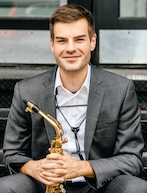
“Attending this year's NAMM Show as part of the CMS/NAMM Faculty Fellows Program was an invaluable opportunity to network and learn from industry leaders, as well as fellow educators in the field. Few professional development opportunities have left me feeling this inspired and supported while also providing a wealth of resources to share with my student community.”
Nicole Molumby (Boise State University)
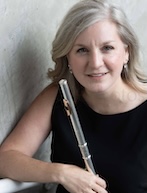
“Experiencing NAMM for the first time with my Boise State Student Christine Nygard, BA music! We were both blown away by the amazing variety of industry/educational offerings, live music performances, and ‘electric’ show floor!”
Scott Patterson (San Francisco State University)
“Participating in NAMM as a Faculty Fellow provides a much more engaging NAMM Show experience. The opportunity to network with a select group of faculty from diverse disciplines was especially rewarding. Plus, we got a cool ribbon for our show badge.”
Tina Stallard (University of South Carolina)
“I am grateful to NAMM and CMS for their support via the Faculty Fellows program. It was wonderful to connect with and learn from my colleagues around the country. Our members and their programs are doing exciting work in preparing the next generation of music industry professionals. The NAMM show is an experience unlike any other, with endless opportunities to explore products, industry insights and innovation, educational resources and a wide variety of live performances.”
Daniel Strange (Frost School of Music, University of Miami)
“This was my 6th NAMM show, and I can honestly say that it was truly the best one yet! Having the honor of being selected as a CMS Faculty Fellow, I was able to dialogue with so many wonderful colleagues from across the country who are totally committed to music education’s exciting future. I felt a strong sense of enthusiasm surrounding all of the professional development sessions, and, as always, walking the NAMM show floor was magical. Counting the days until NAMM 2026…”
Kim Wangler (Appalachian State University)
“NAMM is an amazing time to connect with old friends and see new products—literally the best of the old and the new!”
CMS January Spotlight - CMS Board Members
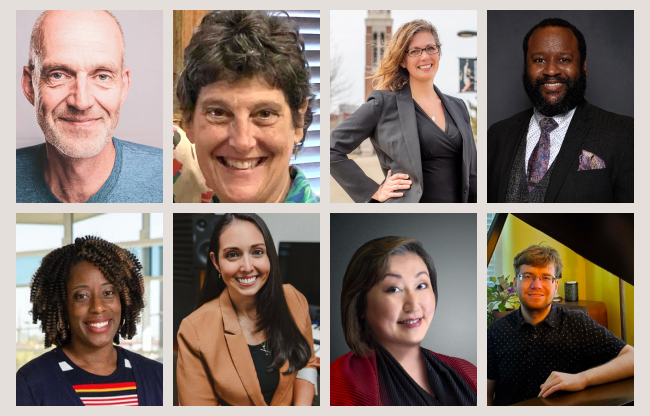
CMS is thrilled to welcome our newly elected board members to the CMS Board of Directors! See the Spotlight below to learn more about what most excites them about their leadership roles within The College Music Society.
Brian Pertl, President-Elect
“I am looking forward to being a part of the most forward-looking, change-making organization for Music in Higher Education. It is an honor to serve as President-Elect and work with CMS to keep moving our discipline forward.”
Bonnie Sneed, Treasurer
“I am looking forward to spending more time with our wonderful CMS staff and Board. Plus, I hope to continue to help improve our financial systems so that CMS can use our resources for the betterment of our musical community.”
Elisabeth Hoegberg, Board Member-at-Large
“It is such a privilege to be elected to the CMS board as Member-at-Large. I am most looking forward to many exciting conversations with colleagues across the membership to discover how best to advocate for their needs and those of the organization.”
Drew Coles, Board Member for Jazz & Commercial Music
“I'm most looking forward to collaborating with colleagues to elevate the equitable institutional appreciation and affirmation of music and lived musical experiences.”
Suzanne Hall, Board Member for Music Education
“I am honored to begin my second term on the board and ready to work on behalf of my colleagues to celebrate the remarkable achievements in our profession and to provide support and tools to address the challenges we face.”
Jessica Muñiz-Collado, Board Member for Music Industry
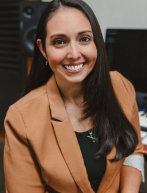
“I am honored to have been elected and remain steadfast in my commitment to supporting music industry education for both faculty and students. My unwavering passion for this cause is stronger than ever, and I eagerly anticipate the opportunity to make a meaningful and positive impact with my fellow board members.”
Mihoko Watanabe, Board Member for Music Performance

“As I start my role as Chair of the CMS Performance Council in January 2025, I am eager to engage with colleagues in thoughtful exploration of the challenges and opportunities shaping the art of performance today. With a commitment to fostering growth, embracing the dynamic process of inquiry and discovery, and nurturing innovation and creativity, the Council will navigate the evolving landscapes of our field while honoring its rich heritage and envisioning a vibrant future.”
Adam Rizzo, CMS Student Representative
“I am looking forward to working with the Executive Board in this student representative position. I am excited to learn more about CMS and its larger mission!”