
Belonging
Letter from Shawn Copeland, “Belonging” Pillar Chair
In higher education in music, belonging is most often discussed in relation to culture, equity, access, and representation. These conversations have asked us to examine whose music is valued, whose histories are centered, and whose identities are affirmed within our curricula, ensembles, and institutions. This work remains essential.
At the same time, the CMS Think-Tank Summit invites a broader and deeper consideration of belonging — not only as a cultural or institutional outcome, but as a foundational condition that shapes how learning, creativity, and professional identity are formed.
Belonging is frequently framed as something institutions provide through policies, programs, and stated values. While these external structures matter deeply, they do not fully explain why students and faculty may still struggle to engage, take creative risks, or sustain themselves within environments that are otherwise supportive. Increasingly, scholarship across education, neuroscience, and trauma-informed pedagogy suggests that belonging is also an experienced state, one reflected in how individuals meet challenges, pressure, feedback, and uncertainty.
Within academic music settings, we often observe recurring patterns of response to these demands: some individuals respond by over-efforting and holding themselves to relentless standards; others by doubting their legitimacy despite evidence of competence; others by appeasing expectations at the expense of their own needs; and others by withdrawing, numbing, or disengaging when the load becomes too great.
These patterns are not indicators of character or motivation. They are adaptive responses to environments that place high cognitive, emotional, and physical demands on learners and educators alike. When viewed through this lens, belonging becomes less about attitude and more about whether the conditions of learning allow individuals to remain connected to themselves while participating fully in the work.
From this perspective, belonging is not in opposition to rigor or excellence. Rather, it supports them. Creativity requires the capacity to tolerate uncertainty and exploration. Innovation depends on experimentation and the willingness to risk failure. Professional preparation requires resilience, relational capacity, and adaptability. These qualities are difficult to cultivate when individuals must remain in a constant state of self-monitoring or self-suppression to succeed.
By naming Belonging as a central pillar alongside Creativity, Technology, and Advocacy, this Summit invites participants to ask a different set of questions: not only who is included, but how people experience inclusion over time. How do our curricula, pedagogical norms, workload expectations, and leadership practices shape the ways students and faculty relate to themselves, to one another, and to the work they do? Throughout the Summit, conversations around Belonging will explore how institutional cultures are formed, often unintentionally, through everyday practices and expectations. Attending to these patterns offers an opportunity to move beyond surface-level solutions and toward learning environments that support both creative capacity and long-term Sustainability.
Belonging, in this context, is not a soft value or an abstract ideal. It is a structural and experiential foundation for creativity, meaningful engagement with technology, and effective advocacy for music and the arts. As music schools are reimagined for 2026 and beyond, understanding how belonging is lived—and how it is disrupted—becomes essential to building programs that are artistically vibrant, professionally relevant, and humanly sustainable.
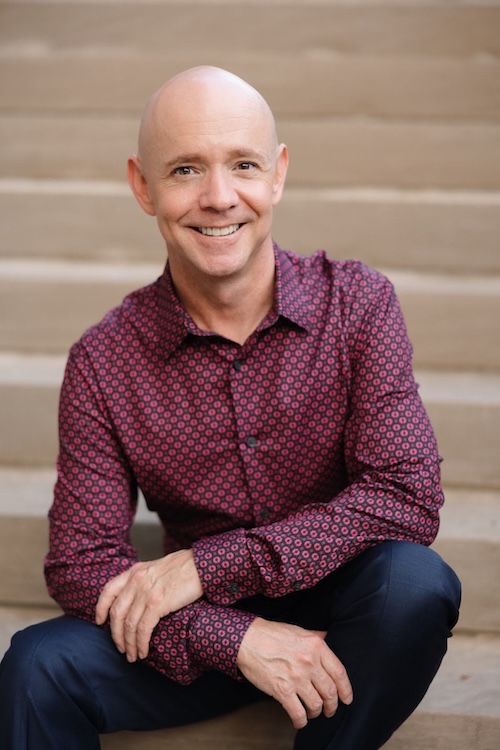
Belonging Begins with the Body: From Self-Belonging to Creativity
Shawn Copeland | mBodyed
About the Speaker
Shawn L. Copeland is a somatic educator, clinician, and consultant whose work sits at the intersection of music performance, higher education, and embodied leadership. He is the Founder and CEO of mBODYed, LLC, an education and consulting practice dedicated to advancing sustainable models of excellence, creativity, and well-being for musicians, educators, and institutions.
Read more
Dr. Copeland holds the Doctor of Musical Arts in Clarinet Performance from the University of North Carolina at Greensboro, with a cognate in the Alexander Technique. His dissertation, Applied Anatomy in the Studio: Body Mapping and Clarinet Pedagogy, reflects an early and sustained integration of anatomical accuracy, somatic awareness, and pedagogical application. He also holds graduate degrees in music performance and arts management, grounding his work in both artistic practice and institutional systems.
Alongside his musical training, Dr. Copeland has pursued extensive professional preparation in somatic education and embodied learning. He is a Certified Sponsoring Teacher of the Alexander Technique and a Licensed Mentoring Teacher of the Association of Body Mapping Education. He is also a Master Somatic Movement Educator and Therapist (ISMETA), an Integrative Somatic Practitioner (IWA), and holds additional certifications in somatic trauma therapy, integrative somatic coaching, performing arts medicine, and diversity, equity, inclusion, and belonging. His training reflects more than two decades of study in anatomy, movement science, nervous system–informed pedagogy, and trauma-aware educational practice.
Dr. Copeland’s scholarship bridges music pedagogy, somatic education, and health sciences. He is co-author of Body Mapping for Clarinetists and the forthcoming The mBODYed Breath: Body Mapping, Breathing, Balance, and Belonging, and his work has been published in somatic journals as well as journals of complementary and rehabilitative medicine. His research and writing examine how embodied awareness, self-belonging, and physiological regulation influence learning, creativity, and professional sustainability in the performing arts.
He has presented widely at national and international conferences and has served in numerous leadership roles within professional organizations, including the College Music Society, Alexander Technique International, and the Association of Body Mapping Education, where his service has focused on pedagogy, ethics, health, accessibility, and belonging. In addition to his academic and clinical work, Dr. Copeland is an artist affiliated with Buffet Crampon USA, Silverstein Works, and Gonzalez Reeds, Inc.
Across his teaching, writing, and consulting, Dr. Copeland is known for articulating a rigorous, embodied approach to music education that reframes excellence not as endurance or self-erasure, but as a capacity that emerges when artistry, physiological awareness, and human sustainability are held together. His work contributes to a growing redefinition of rigor, leadership, and belonging in music schools and higher education.
Abstract
Coming soon...
Discussion Questions
Locating belonging in the “where, what, and who” of music schools
Gretta Sayers | Brandon University
About the Speaker
Gretta Sayers is Assistant Professor of Music Theory and Aural Skills in Brandon University’s School of Music. Her research explores music theory pedagogy, care, analysis & performance, and formal functions. She collaborates with a singer to explore how the language and tools of formal analysis can facilitate an embodied, physical experience in performance to encourage connections between the intellectual and physical aspects of music making.
Read more
Gretta also studies how formal functions, traditionally applied to tonal music, can be adapted for Western Art Music composed around the turn of the twentieth century. Recently, Gretta has partnered with colleagues across four faculties at Brandon University in a cross-disciplinary exploration of the cultures and tensions of care in higher education. They aim to shed light on how care manifests, or doesn’t, in academia and explore strategies to foster an environment where all can thrive.
Abstract
Coming soon...
Discussion Questions
Building Community & Belonging Through Strategies Grounded in Trauma-Informed Pedagogy
Elizabeth Lantz & Michele Deramo | Virginia Tech
About the Speakers
Elizabeth Lantz
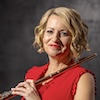
Flutist Elizabeth Lantz is Associate Professor of Practice in the School of Performing Arts at Virginia Tech and a Yamaha Performing Artist. A versatile performer and educator, she has appeared as a soloist and chamber musician across the United States and internationally, with engagements in Trinidad, South America, Canada, Europe, the Baltics, and South Korea. She regularly presents masterclasses and lecture-recitals, with recent performances at the College Music Society International Conference in Colombia and the National Flute Association Annual Convention.
Michele Deramo
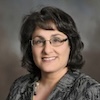
Michele C. Deramo is a transformational thought leader and creative with 35+ years’ experience in higher education. She was Associate Vice President for Education and Engagement in the Office for Inclusive Strategy and Excellence at Virginia Tech until the dissolution of the office by state and federal mandate in March 2025. She currently works as the Community and Belonging Specialist in the Center for Excellence in Teaching and Learning.
Read full bios
Elizabeth Lantz:
Lantz’s creative practice centers on contemporary music, interdisciplinary collaboration, and technology integration. She premiered The Fluted Bird for amplified flute and computer by Charles Nichols at ARTX in Montreal, supported by Virginia Tech’s Institute for Creativity, Arts, and Technology (ICAT) and McGill University’s CIRMMT, and has performed at new music festivals nationwide. A committed advocate for expanding the flute repertoire, she commissions and premieres new works, including Valerie Coleman’s Wish Sonatine, now widely performed internationally.
An active pedagogue and adjudicator, Lantz has taught in international residencies and served on juries for major competitions. At Virginia Tech, she serves on the Provost’s Innovation Group leadership team for Community and Belonging, grounded in Trauma-Informed Pedagogy, and coordinates visiting artist residencies for the School of Performing Arts.
Lantz also engages in community arts advocacy, serving on the board of the NRV Friends of the Roanoke Symphony Orchestra and coordinating the SMILES educational series and annual TubaChristmas.
Michele Deramo:
Deramo earned her Ph.D. from the ASPECT program (Alliance for Social, Political, Ethical, and Cultural Thought) with concentration in cultural and social theory at Virginia Tech. Her research and scholarly interests focus on performative identities in diaspora, forced migration, post-colonial and Italian feminism, refugee voice, autoethnography, and arts-based methodologies. She is president of the Italian American Studies Association and co-editor of Dear Higher Education: Letters from the Social Justice Mountain, an online, open access publication giving voice to those whose labor makes campus environments more diverse, equitable, and just.
Abstract
Coming soon...
Discussion Questions

The Heartbeat of Sustainability: Strengthening Rural Pathways Through Collegiate Partnerships
Emily Chapman | Fort Hays State University
About the Speaker
Dr. Emily Chapman is Assistant Professor of Music Education at Fort Hays State University, where she teaches general music methods and mentors undergraduate music education students through practical experiences and career preparation. She holds a PhD in Music Education from the University of Nebraska–Lincoln, where she also earned bachelor's degrees in music education and vocal performance. She completed a master's degree in vocal performance at Baylor University.
Read more
Before entering higher education, Dr. Chapman taught general music, choir, and musical theatre for a decade in both charter and public schools in the Phoenix metro area. Her research focuses on music teacher preparation, experiential learning, rural music education, and the mental health of tertiary music students, with particular attention to anxiety, depression, and stress.
In addition to her university role, Dr. Chapman founded a community youth choir in Hays, Kansas, and remains active as an adjudicator for choral and vocal events, with a special interest in supporting programs in smaller and rural districts.
Abstract
Coming soon...
Discussion Questions
Retooling Music Education to Support and Sustain Culturally Responsive Teaching for ALL Students
Nancy Barry | Auburn University
About the Speaker
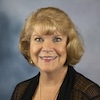
Nancy H. Barry is Professor and Program Coordinator of Music Education in the Department of Curriculum and Teaching at Auburn University. She earned the Bachelors of Music Education from Middle Tennessee State University; Master's degree and Ph.D. in music education, and certificates in Electronic Music and Computers in Music from Florida State University.
Read more
Barry has numerous publications in peer-reviewed journals such as Arts and Learning, Psychology of Music, Journal of Music Teacher Education, Contributions to Music Education, UPDATE, and Bulletin of Research in Music Education, and is a frequent presenter at national and international professional conferences. She served as editor of the Journal of Technology in Music Learning, and currently serves as reviewer for national and international research journals such as Psychology of Music. Barry is an active member of professional organizations such as NAfME and the College Music Society (CMS). Professional service includes past President of the CMS Southern Chapter, National CMS Secretary from 2016 – 2018, co-chairing the CMS Career Development Committee, and serving as a screener and for the 2023, 2024, 2025, and 2026 Grammy Music Educator Awards. Barry was awarded the Auburn University Distinguished Graduate Faculty Lectureship in 2022.
Abstract
Coming soon...
Discussion Questions
The Belonging-Colorblindness Paradox: From Brown to Today
Anthony Taylor | University of North Carolina, Greensboro
About the Speaker
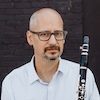
Anthony Taylor, clarinet, has been on the faculty of the University of North Carolina College of Visual and Performing Arts and Principal Clarinet of the Winston-Salem Symphony since 2007. He has been an Artist/Teacher for the Eastern Music Festival since 2013 and served on the faculty of the Hot Springs Music Festival (Arkansas) from 2008–2012.
Read more
He has formerly held positions with the Spokane Symphony, the Boise Philharmonic, Washington State University, Eastern Washington University, and Whitman College. Taylor’s clarinet playing can be heard on recordings on the Navona, Centaur, Naxos American Classics and Gothic recording labels, and the most recent releases are two Centaur records projects with New Music Raleigh. The most recent is the world premiere recording of Brett William Dietz’s opera introspective Headcase, and another recent release is the debut recording of composer DJ Sparr, 21207. He can also be found on youtube; his video promoting his March 2011 basset clarinet performances of the Mozart concerto with the Winston-Salem symphony now has nearly 100,000 views. In 2014, Taylor was among the first performers of Donald Crockett’s Dance Concerto(please see media page for recordings). He has appeared at the International Clarinet Association ClarinetFest®, with a notable performance of John Adams’s clarinet concerto Gnarly Buttons in 2010 and in 2011, the world premiere of UNCG composer Alejandro Rutty’s work for Guitars, for two clarinets and Ableton Live-based electronics. In recent years, Taylor has been expanding his pedagogical skills through extensive study of human movement and the Alexander Technique, and expects to complete his ATI certification as a teacher of the Alexander Technique some time during the 2016–17 academic year. Taylor holds degrees from the University of Cincinnati College-Conservatory of Music, the Florida State University and Washington State University. His former teachers include Steve Cohen, Ron Aufmann, Richard Hawkins, Frank Kowalsky, Jim Schoepflin, and Joseph Brooks.
Abstract
Coming soon...
Discussion Questions
Opening Composition Curriculum to Genre, Media, and Instrumentation
Charles Nichols | Virginia Tech
About the Speaker
Composer, violinist, and computer music researcher Charles Nichols explores the expressive potential of instrumental ensembles and computer music systems, for the concert stage and collaborations with dance, video, and installation art. Spatial audio, data sonification, motion capture, telematic performance, and interface design play a role in his creative process. He performs on electric violin and laptop as a member of the band Modality and on laptop in the duo Kill All Kings, with saxophonist Kyle Hutchins.
Read more
After earning degrees from the Eastman School of Music, Yale University, and Stanford University, he was a technical director at the Center for Computer Research in Music and Acoustics and an Associate Professor at the University of Montana. He currently serves as Professor of Composition and Music Technologies at Virginia Tech. Recent publications include the album Crossing the Divide, recorded by the Beo String Quartet and released by Centaur Records, the Modality album Embodiment, released by House of Watts, the Kill All Kings album Four of a Kind, released by Mother Brain Records, and the chapter "Motion Capture for Musical Expression" in the book Collaboration, Engagement, and Tradition in Contemporary and Electronic Music, published by Routledge.
Abstract
Coming soon...

Want To Create a Culture of Inclusivity? Start small.
Andrew Stetson | Texas Tech University
About the Speaker
Dr. Andrew Stetson is a versatile performer, clinician, educator, scholar, and administrator. He currently serves as Director and Professor in the School of Music at Texas Tech University.
As a performer, Dr. Stetson serves as Principal Trumpet of the Steamboat Springs Symphony Orchestra (CO) and has performed with numerous orchestras, including the Alabama Symphony, Albany Symphony (NY), Arkansas Symphony, Boston Philharmonic, Colorado Music Festival Orchestra, Houston Symphony, and Lubbock Symphony.
Read more
Dr. Stetson has presented at numerous conferences, including the Texas Music Educators Association Clinic and Convention and the Florida Music Educators Association Convention. He has also served as an invited presenter at the Alliance for the Arts in Research Universities (a2ru) and the College Music Society.
His performances, recordings, clinics, and masterclasses have earned him the 2022 Chancellor's Council Distinguished Research Award, the top faculty honor for research within the entire system of Texas Tech University.
Dr. Stetson is also a dedicated educator, recently named one of Yamaha's 40 under 40 for Music Education Excellence. His students have achieved numerous accolades, including invited performances at the National Trumpet Competition, Ellsworth Smith International Trumpet Solo Competition, winning positions with full-time military ensembles, and gaining admission to top graduate programs.
Abstract
Coming soon...

Engaging Your VIP of Enrollment to Boost Music Recruiting
Eytan Wurman | CommonTime
About the Speaker
Coming soon...
Abstract
Coming soon...

Bring Us Music, Tell Us Why You Love It: Creating Belonging and Connection through Shared Listening
Sarai Brinker | Texas Tech University
About the Speaker
Dr. Sarai Brinker is an administrator, curriculum innovator, and award-winning educator whose work bridges music history, pedagogy, and community engagement. She currently serves as Associate Director for Academic Studies and Affairs at Texas Tech University School of Music, where her teaching spans topics such as music and society, global music traditions, creativity, and popular music.
Read more
She is widely recognized for developing high-impact, student-centered curricula, including popular music surveys centered on Taylor Swift. Additionally, she promotes cross-cultural musical collaborations with international artists, notably with the Dal’Ouna Ensemble.
As an administrator she has led music humanities initiatives that increased relevance and expanded access to music-based courses for students across campus. Her leadership in curriculum development has shaped multiple undergraduate programs, including the creation of new minors, honors programming, and community-based music projects, including a partnership with the Carnegie Hall Lullaby Project.
Her research explores popular music studies, feminist pedagogy, AI and creativity, and community-engaged musical practices. She currently serves as an editor for a forthcoming special issue of Popular Music and Society: Taylor Swift. Dr. Brinker has presented work at national and international conferences, including the International Musicological Society, Popular Culture/American Culture Association, and the Alliance for the Arts in Research Universities (a2ru).
Abstract
Coming soon...
Recruitment and retention of underrepresented populations in Higher Education Music Programs: From Theory to Practice
Suzanne Hall | Temple University, Kathleen Doutt | Immaculata University, & Angelica Brooks | Johnson C. Smith University
About the Speakers
Suzanne Hall
Suzanne Hall is an Associate Professor of Music Education at Temple University, where she teaches general music courses. Her primary research interests focus on the connections between music and language arts, as well as on cultivating inclusive and creative learning spaces. She frequently presents at conferences and conducts professional development workshops on music and literacy integration strategies for school districts nationwide.
Kathleen Doutt
Sister Kathleen C. Doutt, IHM, D.M.A., Professor of Music Emerita, Immaculata University, holds a B. Mus. degree from Immaculata University, M. Ed. from West Chester University, and D.M.A. from Temple University. Active in several professional organizations, she has held leadership positions including PMEA Collegiate State Advisor. Currently she is a Pi Kappa Lambda Regent and member of the CMS Council on Music Education.
Angelica Brooks
Dr. Angelica Brooks is the Director of Choral Activities at Johnson C. Smith University and has a reputation for building strong choral programs and advanced singing musicians. She has served the choral community as a guest conductor, festival adjudicator, clinician, mentor teacher, curriculum writer, and professional development presenter.
Read full bios
Suzanne Hall:
She is the author of The Musical Bookshelf and co-author of Teaching Elementary Music: Integrative Strategies between Music and Other Subjects and General Music: A K–12 Experience. Her articles appear in journals such as the Journal of General Music Education, Music Educators Journal, Philosophy of Music Education Review, Journal for Music Teacher Education, and College Music Symposium. Her forthcoming book, Repositioning Musical Creativity in Higher Education: Leading Change Toward a More Panoptic, Creative Future (Routledge), explores human-centered approaches to creativity, drawing on diverse perspectives and epistemologies to inform how educators teach and engage with creative practice in the future. She currently chairs the College Music Society’s Council on Music Education and serves as a board member for the Save The Music Foundation. She earned her Master of Education and Bachelor of Music Education from the University of Central Florida and a Doctor of Philosophy from the University of Memphis.
Kathleen Doutt:
Her ongoing research in latino music has yielded rich folk music and dance resources for coursework and conferences. Supported by Teagle grants focused on faculty metacognition, she has established a faculty learning community at her university and has created a rubric for cross-disciplinary faculty metacognition. She regularly gives presentations on Latin American music and dance, integration of technology in music teaching, and the higher education music core curriculum. These include sessions at the PMEA conference, ATMI section of the 2014 College Music Society Conference, the 2016 CMS Pre-conference on Technology, the 2017, 2020, 2021, 2022, and 2024 College Music Society Conferences, and the 2018, 2019, 2020, and 2023 CMS Northeast Regional Conferences. She holds credentials in AI and is developing pedagogical strategies for using AI to develop musicianship and critical thinking in the collegiate music education curriculum.
Angelica Brooks:
Dr. Brooks received her Doctor of Musical Arts in Music Teaching and Learning from the University of Southern California. She is the Alumnae Association Director of Sigma Alpha Iota International Music Fraternity, and a member of Pi Kappa Lambda International Honor Society for Music. In service to the field of music education, Dr. Brooks serves on the National Executive Board for the National Association for Music Education (NAfME) and is co-chair of the NAfME Equity Committee. She is also a member of the College Music Society’s (CMS) Music Education Committee and is a member of the American Choral Directors Association (ACDA).
Abstract
Coming soon...

Creating a Safe Space in Today’s Classroom
Susan de Ghizé | Texas A&M Corpus Christi
About the Speaker
Dr. Susan de Ghizé is a Professor of Music at Texas A&M University – Corpus Christi (TAMU-CC), where she is also the Program Coordinator and Music Theory & Aural Training Coordinator. Her research has focused on the music of Brahms and Mozart and the theories of Hauptmann and Schoenberg.
Read more
More recently, Susan’s research has turned to music theory pedagogy, including a website called Steps to Harmonic Dictation and an Open Educational Resource called Steps to Music Theory. At TAMU-CC, she has won the University Excellence Award in Teaching, the Digital Innovator of the Year, and the Excellence in Disability Access and Inclusion Award. In 2025, Susan was named a Minnie Stevens Piper Professor.
Abstract
Coming soon...