

Creativity
Letter from Suzanne Hall, “Creativity” Pillar Chair
What if one believes that creativity constitutes a fundamental facet of the human experience, and when fully manifested, it can unlock avenues for innovation that are vital for societal progress, personal fulfillment, and enjoyment? Creative expression from this premise is endless and can serve many purposes for individuals who activate it. Building on the groundwork that has shaped creativity in higher music education, we will explore the creative experience at a multidimensional level. Specifically, we will engage in conversations about how we might make space for us, as creative beings, and for our students to reach for musical pursuits rooted in their aspirational goals (which may be as diverse as the fingerprints that make us all unique).
- What can we discover when we reflect on creativity not only as a product but as a journey situated in context? For example, some people believe that living is a creative act, thus musical expression exudes from that existence.
- What if higher education viewed creativity as an innate human endeavor, and what does this look like in a music school curriculum?
- What kinds of creative practices prepare students for adaptable, lifelong careers in music?
- How might we assess creativity without limiting its expression in a career-centered curriculum?
- Which creative challenges mirror real-world career demands, and how can we embed those experiences into coursework?
- What if students were encouraged to use their own creativity to uplift and impact the larger university communities?
Creativity will exist outside of music in higher education. New genres will emerge, and innovation with sound will continue to grow. How might music programs be at the forefront of that innovation?

Pushing All the Boundaries
Brian Pertl | Denver University
About the Speaker
A distinguished academic leader, ethnomusicologist, and didjeridu player, Pertl brings a wealth of experience to the Lamont community. He joins DU after serving for 17 years as the Dean of the Lawrence Conservatory of Music. During his time at Lawrence, the conservatory created a new BMA Degree in Jazz and Contemporary Improvisation and rolled out a non-auditioned BA Major in Music; it was recognized as the First Deep Listening Affiliate Institution in the world; it became a national leader in civic engagement and community collaborations; and the ensembles garnered over 40 national recognitions for excellence in performance from organizations such as DownBeat, The National Opera Association, The American Prize, and the American Choral Directors Association. Pertl also successfully raised funds for new faculty lines, the Presto touring program, and endowments to fund student projects, travel, and research.
Read more
Pertl is a graduate of Lawrence as well, where he earned a B.M. in trombone performance and a B.A in English. After receiving a Thomas Watson Fellowship, he traveled to Australia, Tibet, Nepal and India to study the use of harmonics in Australian Aboriginal didjeridu playing and Tibetan sacred chanting. He went on to complete his M.A. in Ethnomusicology from Wesleyan University, before moving to Seattle to undertake his Ph.D. in Ethnomusicology from the University of Washington. Before completing his degree, he was offered a position as an ethnomusicologist at Microsoft. Pertl, along with a team of other ethnomusicologists, helped pioneer the use of music and sound in multi-media reference titles, by selecting, licensing, and captioning over a thousand music excerpts for Microsoft’s Encarta Encyclopedia, Encarta World Atlas, and Encarta Africana. For ten years, he managed the Media Acquisitions Group, Microsoft’s central resource for selecting, captioning, and licensing all forms of audio, images, and video.
Throughout his career, Pertl has been a driving force in reimagining the role of music schools in higher education. His book, Radically Responsive Music Schools: Leading Change Through Culture Building, is a philosophical reimagining of university-level music school culture from the ground up. It argues that holistic cultural change is the key factor needed for music schools to prepare 21st-century graduates for contemporary challenges. Under Pertl’s leadership, the Lawrence Conservatory of Music became known for its forward-thinking approach to music education, rooted in his philosophy of Deep Listening—a practice developed by composer Pauline Oliveros that emphasizes heightened awareness and inclusivity in musical engagement.
Abstract
Coming soon...
Discussion Questions

Creativity: Who? What? Why Not?
Adrian Davis | University of Minnesota Twin Cities
About the Speaker
Adrian Davis is a native of Memphis, TN, and he currently resides in Minneapolis, Minnesota. He is a skilled and experienced educator whose contribution to the profession is developing programs that intentionally center the student voice, community uplift, sociocultural relevance, and critical consciousness.
Read more
Adrian is an Assistant Professor of Music Education and Director of the Gospel Choir at the University of Minnesota. His passion for diversity and equity is amplified in his published dissertation: “Underrepresentation of African Americans in Music Positions at Predominantly White Institutions: A Multi-Narrative Case Study.” His current research continues to launch deeper into diversity and equity, with an emphasis in critical pedagogies, amplifying marginalized and racially minoritized voices, and democratizing K-12 and post-secondary pathways in music education.
He is an actively engaged member of the National Executive Board for the National Association of Music Education (NAfME), serving on the Equity Committee. He is also an active member of the other professional arts organizations, such as the American Choral Directors Association (ACDA), the Percussive Arts Society (PAS), and the Association for Popular Music Education (APME).
Abstract
Coming soon...
Discussion Questions

Creative Performance Practice
David Cutler | University of South Carolina
About the Speaker
An award-winning, multi-genre composer, pianist, and Yamaha Master Educator, Dr. David Cutler balances a varied career as a speaker, author, consultant, musician, and educator. A self-proclaimed "weekend traveler,” his artistic statements seamlessly weave classical, jazz, popular, folk, and world music. Stretching what it means to be a performer, events regularly involve extreme eclecticism, choreography, humor, interdisciplinary collaboration, and more.
Read more
One of the world’s leading voices on arts entrepreneurship training, Cutler’s acclaimed books The Savvy Musician and The Savvy Music Teacher—which provide tools for amplifying income, impact, and innovation—have shaped a generation of artists. His recent title The Savvy Musician 2.0 is the most comprehensive resource available on music careers and entrepreneurship.
Cutler is also revered as a facilitator. Known for leading immersive “innovation GAMEs,” his powerful, team-based experiences empower arts, education, and business communities to solve creative challenges while becoming better collaborators. His full-color, illustrated book The GAME of Innovation guides readers to conquer complex challenges, align teams behind shared visions, and invent the extraordinary.
Cutler serves as Distinguished Professor of Music Entrepreneurship and Innovation at University of South Carolina. He is a member of the Liberty Fellowship and Aspen Global Leadership Network, associations aimed at building a more just society.
Abstract
Coming soon...
Discussion Questions

Creativity as Paradigmatic Change Gateway
Edward Sarath | University of Michigan
About the Speaker
Ed Sarath is Professor of Music in the University of Michigan Department in Jazz and Contemporary Improvisation and also founder of the U-M Program in Creativity and Consciousness Studies. He is a composer, performer (flugelhornist), author/scholar and change visionary. Recent compositions include his five-movement setting of Maya Angelous’ tribute to Nelson Mandela, His Day is Done, for symphony orchestra, and soloists with performances in South Africa and Brazil, and his setting of Brazilian poet Anibal Beça’s Uma Vida and Constataçao for the Amazonas Jazz Orchestra.
Read more
His recording New Beginnings features the London Jazz Orchestra performing a program of his works. Books include Music Theory Through Improvisation (Routledge), Black Music Matters, (Rowman and Littlefield), and Improvisation, Creativity and Consciousness (SUNY Albany), the first book to apply to music principles of Integral Theory. His newest book is Music Studies and Its Moment of Truth: Leading Change Through America’s Black Music Roots (Routledge).
He is on the Advisory Board and a Founding member of the Society for Consciousness Studies, and Founder of the International Society for Improvised Music. He has designed innovative curricula, including BFA in Jazz and Contemplative Studies, and DMA in Jazz and Contemporary Improvisation.
Abstract
Coming soon...
Discussion Questions

Music Industry Professionalism
Amy Sorter | University of South Carolina
About the Speaker
Amy Sorter brings more than 25 years of dynamic experience in higher education to her role as Director of Higher Education for Yamaha Corporation of America, where she also leads the Outbound Sales Team, guiding strategy, performance, and institutional engagement across the national higher education landscape. In this role, Amy aligns people, purpose, and partnerships to advance Yamaha’s long-term impact across colleges and universities, ensuring both mission alignment and sustainable growth.
Read more
Her career spans multiple facets of the education ecosystem — from student lending and statewide retention initiatives to academic publishing — providing her with a uniquely holistic and systems-level perspective on the evolving needs of students, educators, and institutions. Known for her ability to connect strategy with execution, Amy brings creativity, clarity, and thoughtful leadership to complex institutional environments.
Before joining Yamaha, Amy worked with the California Community Colleges Chancellor’s Office, where she led impactful initiatives focused on student success, access, and retention. Her work in educational publishing further strengthened her ability to translate innovation into practical solutions that support teaching, learning, and institutional outcomes.
In addition to her leadership at Yamaha, Amy serves as a Professor of Music Industry Studies at the University of South Carolina, where she bridges real-world industry experience with academic instruction. She is deeply committed to mentoring emerging leaders and empowering students to navigate and shape the future of the music and creative industries.
Amy’s leadership is defined by strategic vision, collaborative problem-solving, and a deep belief in the power of education to transform lives. Her ability to align people, purpose, and possibility makes her a trusted leader and a driving force behind Yamaha’s mission to elevate music education nationwide.
She holds a Bachelor of Arts in English Journalism from the University of New Hampshire.
Abstract
Coming soon...
Discussion Questions

Reclaiming Imagination in College Music Programs: The Role of Improvisation
James Falzone | Cornish College
About the Speaker
Clarinetist, penny whistle player, composer, and improviser James Falzone is an acclaimed member of the international jazz and creative music scenes, and an award-winning composer who has been commissioned by chamber ensembles, dance companies, choirs, and symphony orchestras around the globe. He leads his own ensembles and collaborates with many leading improvising musicians throughout North America and Europe.
Read more
James has released a series of critically acclaimed recordings on his label Allos Documents, appears regularly on 𝘋𝘰𝘸𝘯𝘣𝘦𝘢𝘵 magazine's Critics' and Readers' Polls, and was nominated as the Clarinetist of the Year by the Jazz Journalist Association. Educated at Northern Illinois University and New England Conservatory, James is a respected educator and scholar and has been on the faculty of The School of the Art Institute of Chicago, Deep Springs College, and was a fellow at The Center for Black Music Research. His research on the practice of improvisation has been presented at numerous academic conferences and to diverse audiences including Admirals at the US Naval War College and executives at Google’s creative retreats. James is presently the Associate Dean of Faculty and a Teaching Professor at Cornish College of the Arts at Seattle University.
Abstract
Coming soon...
Discussion Questions

Embodied Learning for Creative Musicians
Danielle Herrington | University of Central Oklahoma
About the Speaker
Dr. Danielle L Herrington is an artist-scholar, actively researching, teaching, and performing. She is the Assistant Professor of Musicology at the University of Central Oklahoma and Academic Coordinator for the Brisch Center for Historical Performance. Her scholarship approaches music as embodied and lived experience, with specific investigations in 18th- and 21st-century culture, philosophy, opera, and theatre. Danielle has internationally and nationally presented and published on these topics, and her forthcoming book Commissioning Opera in the Twenty-First Century with Routledge will be published in 2026.
Read more
As a lyric coloratura soprano, Danielle interprets a range of roles, including Händel’s Rodelinda, Belinda (Dido and Aeneas), Serpina (La serva padrona), La Musique (Les plaisirs de Versailles), Josephine (HMS Pinafore), Olive Anne Beech (Staggerwing) as well as many newly commissioned contemporary roles. She is an avid concert soloist, from J.S. Bach to Beethoven and Verdi to Orff, while her recital programming highlights historically marginalized creatives. Dedicated to community education, Danielle founded and serves as the Artistic Director of OK City Opera. Danielle holds a Doctorate of Musical Arts from the University of Oklahoma as well as two Masters of Music (Opera Performance; Music History/Literature) both from Wichita State University. www.danielleherrington.com / @elleherrington
Abstract
Coming soon...

Effectual Artists: Building Resilient, Creative, and Intentional Careers in Uncertain Times
Emily Martin | Bucknell University
About the Speaker
Emily Martin, an acclaimed American soprano and New England native, has built a vibrant 30-year career as an opera singer, stage director, voice teacher, vocologist, yoga instructor, and arts leader. Praised for her “enchanting iridescence” (The Sarasota Herald-Tribune), she has performed internationally with companies such as The Santa Fe Opera and the Royal Liverpool Philharmonic. The Chicago Tribune named her 2020 album Let Evening Come one of the “Best Classical Recordings of 2020.” Upcoming recitals in 2025–2026 include performances in Utah, Virginia, Colorado, and Melbourne, Australia.
Read more
An educator and SVI-trained vocologist, Emily earned a Fulbright Award (2022–2023) in the Netherlands and served on the voice faculty at The Royal Conservatory in The Hague. Currently, the Ellen P. Williams Associate Professor of Music and Director of the Bucknell Voice Lab, she integrates wellness, entrepreneurship, and innovation into her teaching. Learn more at emilymartincreative.com.
Abstract
Coming soon...

Music Ecosystem Anchors: The Future is Local
Jake Hertzog | University of Arkansas
About the Speaker
Dr. Jake Hertzog is a multi-genre award-winning guitarist, composer, songwriter, scholar, and educator whose career to-date has spanned eleven albums as bandleader across jazz, rock and classical new music styles. His research focuses on how higher music education is adapting to the digital music industry. Other research includes data use in the music industry, music ecosystems, ambisonic improvisation, and entrepreneurial pedagogy.
Read more
Hertzog’ research has been presented at numerous international conferences including the Jazz Education Network. Association for the Study of Higher Education, Association for Popular Music Education, and College Music Society. His research has been published in journals such as Artivate, and Jazz Education in Research and Practice, and Journal of Popular Music Education. In 2023, Hertzog was awarded a research grant from the National Endowment for the Arts (as PI) for his innovative music ecosystem research investigating the ways that collegiate jazz programs interact with jazz scenes in multiple cities. The results of multiple studies anticipated are in 2025-2026. www.jakehertzog.com
Abstract
Coming soon...

Centering Creativity in Higher Education Large Ensembles
Brian Kaufman | University of Maryland Baltimore County
About the Speaker
Conductor, tubist, educator, and publicly engaged scholar Brian Kaufman develops programs and learning experiences that bring people together through music to foster creativity, highlight injustices, engage multiple perspectives, and inspire action. His work ranges from serving as the U.S. National Coordinator for the United Nations Rio+20 Global Youth Music Contest—which mobilized over 1,000 young musicians from more than 40 countries and reached over 200,000 global participants—to collaborating with Baltimore youth to amplify their voices on pressing social issues through music.
Read more
Abstract
Coming soon...
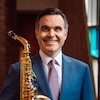
Beyond the Practice Room: Immersive Music Education with Virtual Reality
Jonathan Nichol | University of Oklahoma
About the Speaker
Dr. Jonathan Nichol is the Director of the University of Oklahoma School of Music, where he leads a comprehensive R1 music program while remaining active as a saxophonist, recording artist, and educator. He has released more than nineteen commercial recordings—including Infinity Mirror, Ship of Theseus, and Tenor Attitudes— with his performance of “Sparkle” named one of NPR Music’s Top 100 Songs of 2013.
Read more
As a performer, Nichol has performed nationally and internationally as a soloist and chamber musician, winning first prize with the h2 quartet at the Fischoff Chamber Music Competition. He has premiered numerous new works and given recitals, masterclasses, and residencies across the United States, Europe, and Asia.
Nichol’s students have received over 80 awards at national and international competitions, including prizes at the Fischoff Chamber Music Competition and the Adolphe Sax International Competition. In 2017, he was honored with the University of Oklahoma Distinguished Teaching Award.
Since 2022, he has led OU’s School of Music in developing strategic growth, securing NASM re-accreditation, guiding major fundraising efforts, and expanding academic programs—including a Commercial Music Minor (2025) and the Bachelor of Science in Music Industry, launching in 2026.
Dr. Nichol is a Yamaha and Vandoren Performing Artist.Abstract
Coming soon...

The Significance of the Black Musical Aesthetic in Music Studies
Loneka Battiste | University of Houston
About the Speaker
Coming soon...
Abstract
Coming soon...